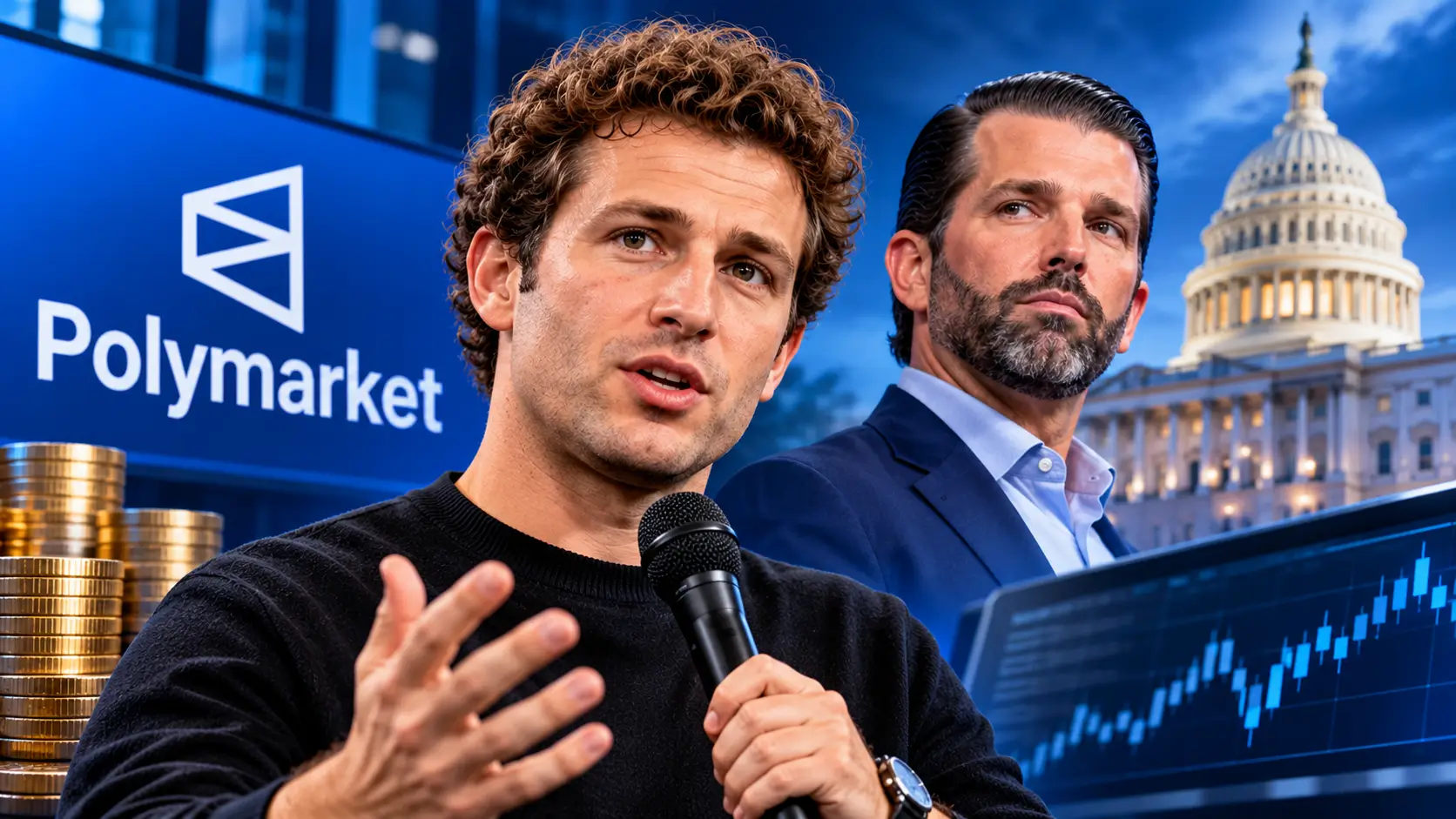
Polymarket CEO Pushes Back on Role Speculation
 Alex Harper • Nov 19, 2026

The Kalshi Maryland lawsuit just ended in a 2-1 loss for the prediction market operator at the federal appeals court level, and the decision reaches well beyond a single state dispute. A US appeals court ruled on November 17, 2026 that Kalshi cannot prevent Maryland gaming regulators from pursuing enforcement actions against the company for allowing users to place financial bets on sports without a license. The bigger question the case raises is whether states can treat sports event contracts like regular sports bets, or whether those contracts belong only to federal regulators. That answer will shape how prediction markets operate across the United States.
Fact checked by Paige Williams
Editorial Statement: At CasinoUS, we independently review and select the online casinos featured on our site. We assess each operator using consistent criteria covering licensing, security, payments, payouts, bonuses, games, customer support and responsible gambling.
We may earn commissions when readers use certain affiliate links. However, commercial relationships do not determine which casinos we feature or how we evaluate them. We highlight both strengths and limitations so that US players can make more informed decisions.
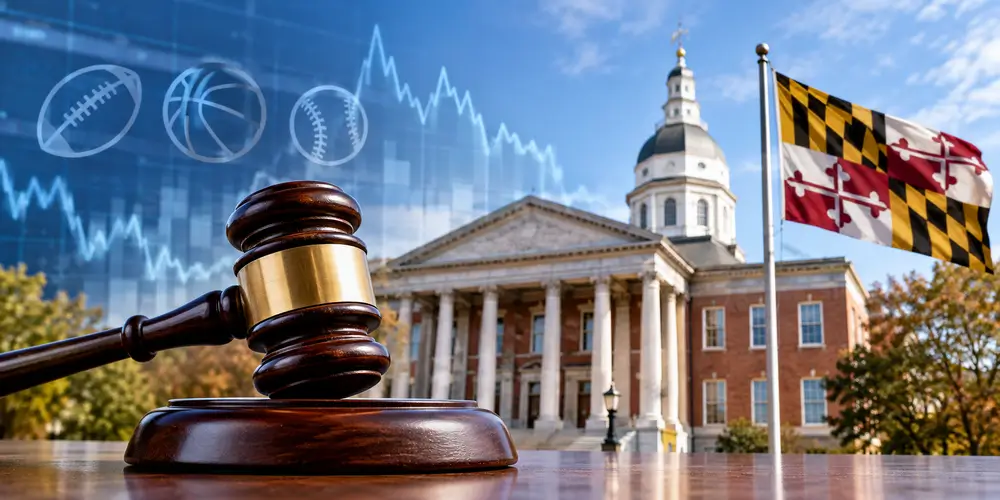
The 2-1 decision by the Richmond, Virginia-based 4th US Circuit Court of Appeals deepens a split among federal appeals courts over whether state gaming regulators have the power to police prediction markets operated by Kalshi and competing platforms. The ruling came down on November 17, 2026, in a case called Kalshi v. Martin.
In plain English, Kalshi had asked a federal judge to block Maryland regulators from enforcing state gambling law against its sports-related contracts. The lower court said no. Kalshi appealed. The 4th Circuit agreed with the lower court. Judges Roger Gregory and Stephanie Thacker sided with Maryland gaming regulator John Martin and other state officials, finding that Kalshi is subject to Maryland’s gambling laws, including the requirement that it apply for and obtain a sports wagering license before offering its products in the state. A third judge dissented.
The ruling does not ban Kalshi outright. It affirmed the denial of a preliminary injunction, which means Maryland’s enforcement effort can continue while the underlying case plays out.
Maryland regulators argue that Kalshi’s sports contracts are sports bets dressed in financial clothing. The state has built one of the more active enforcement records in the country on sports wagering, and more context on how its framework works is available in our guide to Maryland sports betting. Kalshi had been appealing a lower-court judge’s rejection of its request for an injunction in a lawsuit it filed after Maryland gaming regulators sent a cease-and-desist letter last year demanding it stop offering unlicensed sports wagering.
The state’s position goes beyond licensing fees. Under Maryland law, licensed sportsbooks are required to protect customer data, avoid deceptive advertising and follow restrictions on marketing to people who are prohibited from gambling or considered at risk of gambling-related harm. Maryland Attorney General Anthony G. Brown has argued that federal commodities rules do not provide the same consumer protections.
Jeremy Baker, the acting director of the Maryland Lottery and Gaming Control Commission, welcomed the ruling, saying it affirmed the state’s ability to regulate what is clearly sports wagering.
Kalshi’s legal argument rests on federal law. The company runs a designated contract market registered with the US Commodity Futures Trading Commission (CFTC), the federal agency that oversees commodities and derivatives trading. Kalshi argues that the Commodity Exchange Act gives the CFTC exclusive authority over its event contracts, including those tied to sporting outcomes. If that reading is correct, state gambling laws are preempted and cannot touch the product. For a plain-English breakdown of how these platforms actually work, see our explainer on prediction markets.
Kalshi spokeswoman Dani Lever has said Kalshi is an open, nationwide financial exchange and cannot be regulated by 50 different regulators. The company has framed its sports contracts as financial instruments rather than wagers, and has pointed to CFTC oversight as the proper regulatory layer.
Kalshi also notes that different circuits have reached different conclusions, which it says shows the question is far from settled.
The Maryland loss is one of several appellate rulings on the same core issue, and the results do not line up. Two other appeals courts have ruled against Kalshi, while a third concluded New Jersey could not regulate it. Readers who want the broader backdrop can start with our overview of US sports betting laws.
A quick map of where things stand:
These disagreements matter because federal appeals courts are supposed to apply the same federal law. When they split on a major preemption question, the Supreme Court often steps in to settle the issue. Until that happens, Kalshi’s legal footing can shift from one region of the country to another.
The practical takeaway for bettors is uncertainty, especially in Maryland. The ruling clears the way for state regulators to pursue enforcement, which could affect whether Kalshi’s sports event contracts remain available to Maryland residents while the case continues. Kalshi has not been shut down, and the broader legal fight is unresolved, but Maryland’s hand is now stronger.
In states covered by the 3rd Circuit’s earlier decision, the situation is different. And in states where Kalshi faces active lawsuits or cease-and-desist letters, the Maryland ruling may encourage regulators to press harder.
Bettors should also remember what the ruling does not say. It does not declare prediction markets illegal nationwide. It does not ban event contracts as a category. It addresses one state’s power to apply its gambling laws to one company’s sports-related offerings.
A Supreme Court review is possible, but far from guaranteed. The high court agrees to hear only a small share of petitions it receives. The kind of split now showing up in these cases is, however, exactly the kind of disagreement the justices are often asked to resolve.
New Jersey Attorney General Jennifer Davenport and Mary Jo Flaherty, interim director of the state’s Division of Gaming Enforcement, filed a petition for a writ of certiorari on September 2, 2026, asking the justices to overturn an April 2026 ruling from the 3rd Circuit. That petition is still pending. The 4th Circuit’s Maryland ruling adds weight to the argument that the Supreme Court should step in, because the split among federal appeals courts is now sharper.
Even if the justices agree to hear the case, a final decision would take time. Briefing, oral arguments, and a written opinion typically stretch across many months.
Kalshi is not the only operator in this space. DraftKings launched its in-house prediction market exchange, DKeX, after acquiring Railbird, offering sports event contracts in states that have generally not legalized sportsbooks. FanDuel launched FanDuel Predicts, which offers sports event contracts across baseball, basketball, football and hockey only in states where online sports betting is not yet legal, and pulls those contracts from a state once online sports betting becomes legal there.
Neither DraftKings nor FanDuel is a party to the Maryland case. But both companies offer sports-related event contracts under the same federal framework that Kalshi relies on. If courts keep siding with state regulators, other operators could face similar enforcement risks in the states where they offer those contracts. If the Supreme Court sides with Kalshi, the industry gains a clearer path to operate under federal rules nationwide.
The stakes are also competitive. Traditional state-licensed sportsbooks pay state taxes and follow state consumer protection rules. Prediction markets registered with the CFTC do not follow the same state frameworks. That gap is part of what state regulators are pushing back against.
Several moving pieces are worth watching.
First, Maryland can continue its enforcement effort, and the underlying case will keep moving through the lower courts. The 4th Circuit’s decision affirmed the denial of a preliminary injunction, not a final judgment on the merits.
Second, the New Jersey petition remains before the Supreme Court. The justices could request a response from Kalshi, call for the views of the Solicitor General, or rule on whether to hear the case.
Third, more rulings are likely. Kalshi and competing platforms face enforcement actions, lawsuits, or cease-and-desist letters in states across the country, and the CFTC has sued several states to defend what it calls its exclusive jurisdiction over federally registered exchanges.
For US bettors, the clearest message is that the legal picture is still forming. Whether sports event contracts are financial products or bets by another name is a question the courts are actively deciding, and the answer will shape what is available, where, and under whose rules. We’ll keep tracking this story in CasinoUS news.
What happened to Kalshi in Maryland?
A federal appeals court ruled 2-1 on November 17, 2026 that Maryland gaming regulators can pursue enforcement actions against Kalshi over its sports-related contracts. The decision affirmed a lower court’s refusal to block Maryland from applying its gambling laws to the company.
The ruling did not declare Kalshi illegal. It allows Maryland regulators to enforce state gambling law against Kalshi’s sports contracts, which could affect whether those contracts stay available to Maryland users. The broader case is still being litigated.
Maryland regulators say Kalshi’s sports event contracts function as sports wagering and should be subject to the same licensing and consumer protection rules that apply to licensed sportsbooks in the state.
The ruling does not directly bind other companies, but it strengthens the legal position of state regulators who want to treat sports event contracts as sports betting. Operators such as DraftKings and FanDuel offer similar products in some states and could face related challenges, though they were not parties to this case.
It is possible. A petition from New Jersey in a related case is already pending before the Supreme Court, and the Maryland ruling deepens the split among federal appeals courts, which can make review more likely. There is no guarantee the justices will take the case.
No. The decision addresses whether one state can enforce its gambling laws against one company’s sports contracts. Prediction markets remain active, and the federal framework overseen by the CFTC is still in place while the legal fight continues.
 Alex Harper • 10 min
read
 Alex Harper • 10 min
read
 Alex Harper • 10 min
read
 Alex Harper • Nov 19, 2026

 Lara Johns • Nov 19, 2026
 Alex Harper • Nov 18, 2026
 Lara Johns • Nov 18, 2026