Sheetz Worker Keno Tickets Scam Ends in $17K Ohio Felony
 Alex Harper • Nov 13, 2026

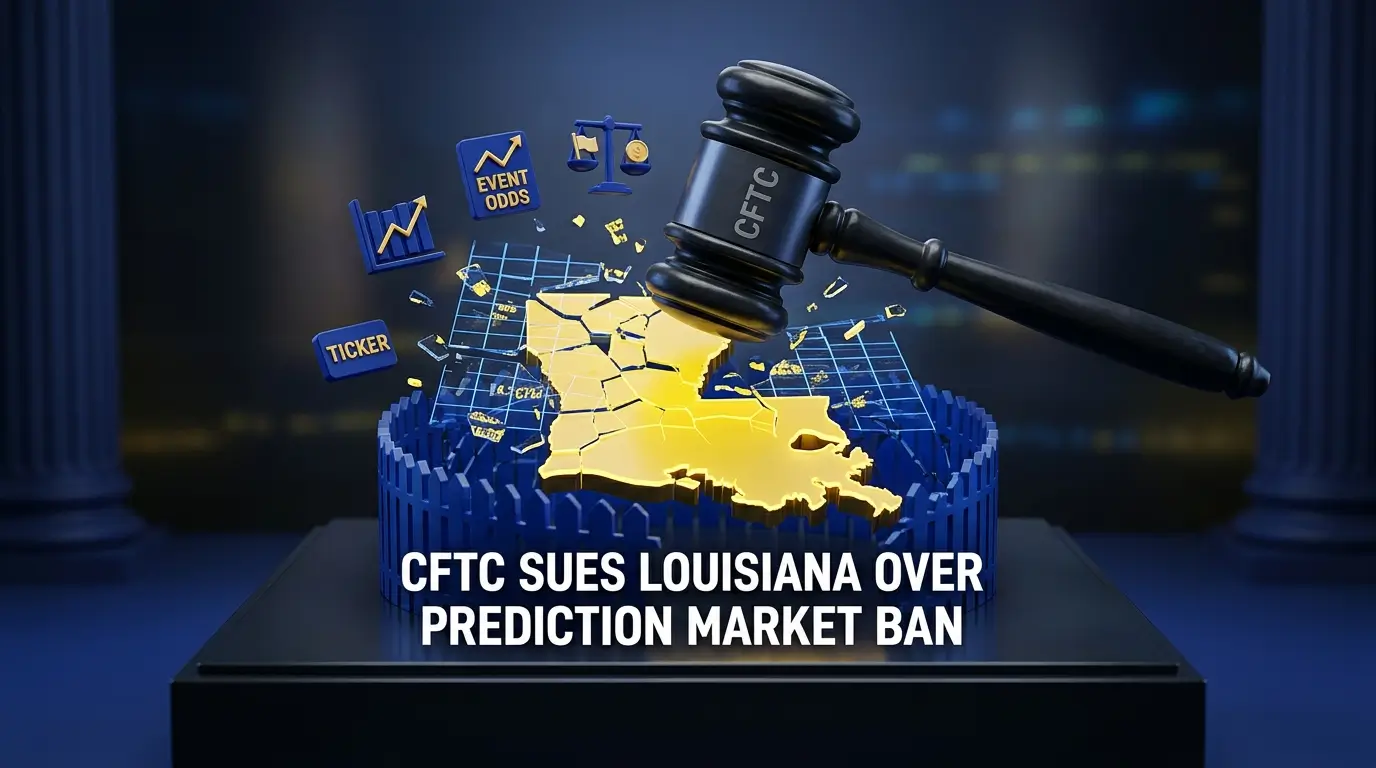
The CFTC sues Louisiana, and the fight is already on. The agency made its move on November 13, one day after a Louisiana judge issued a rush order. That order pushed about three dozen firms to stop selling event contracts to state users.
Fact checked by Dave Cooper
Editorial Statement: At CasinoUS, we independently review and select the online casinos featured on our site. We assess each operator using consistent criteria covering licensing, security, payments, payouts, bonuses, games, customer support and responsible gambling.
We may earn commissions when readers use certain affiliate links. However, commercial relationships do not determine which casinos we feature or how we evaluate them. We highlight both strengths and limitations so that US players can make more informed decisions.
These firms run prediction markets under federal rules. Polymarket and Kalshi sit at the top of the named list.
At the center of the clash is what these products really are. Louisiana treats them as wagers, which puts them under state gambling control. The federal agency treats them as derivatives, which places them on federal turf. A courtroom will decide the label.
On a prediction market, users buy or sell yes-or-no picks on events that have not happened yet. Will a candidate take the White House? Will the Chiefs lift the Lombardi Trophy next February? When the event lands, correct picks pay out. Platforms like Polymarket, Kalshi and Novig run inside the federal swap system, not any state casino rulebook. Louisiana wants that lane closed.
On November 12, a Louisiana court sitting in Tangipahoa Parish issued the rush order after Murrill’s office filed its complaint. The ruling came out of the 21st Judicial District, with Judge Jeffrey Johnson signing his name on it. The order sweeps in about three dozen firms. Polymarket and Kalshi lead the named list. The roster also includes Underdog, Interactive Brokers’ ForecastEx arm, ProphetX, Coinbase, Gemini, IG Group, Robinhood, Crypto.com and Novig.
Each named firm must block Louisiana users from certain contract types. Covered types include elections, sports, award shows and any other outcome the state treats as gambling. Only firms with a Louisiana gaming license are exempt.
How the judge ruled matters a lot here. He signed the order without letting the named firms show up or respond. That ex parte detail became the heart of the federal pushback.
Kalshi was first to obey. Its app now blocks Louisiana logins and sends users to a public campaign against the ruling.
By default, the ruling lifts on its own after 10 days unless the court extends it. A longer-term injunction hearing hits the state docket on November 30.
The CFTC pushed back hard and fast. Chairman Michael Selig called the state’s move a political lawfare stunt. He took the agency’s case to the Eastern District federal court the next day. The legal case stands on two feet:
Selig also argued that these products have run inside Louisiana without a fight for a long stretch. In his view, a state court cannot pull them overnight. He is asking the federal court to freeze things in place while judges work through the deeper legal question.
Louisiana now sits as the twelfth state the agency has dragged into federal court over event contracts.
Liz Murrill, the state’s attorney general, is holding firm. The CFTC sues Louisiana, but Murrill says the state has solid legal footing. She said Selig’s claim that firms have followed federal rules for years is false. She also told the public that states have run their own gambling rules for two and a half centuries.
Her core point is simple. If a company takes bets from Louisianans without a state license, the act is illegal. Any federal label does not change that.
Event-contract apps grew fast in 2026, and state officials have pushed back louder. Louisiana is the hardest push so far. When the CFTC sues Louisiana, every platform in the space takes note. Whatever the court decides here will set the tone elsewhere.
If federal power wins, equal access across the US stays. If state power wins, every state gets a veto over which contracts trade inside its borders. That would force platforms into a patchwork sign-off model nobody in the field wants.
Right now, Louisiana residents cannot access the named platforms. Players outside Louisiana should brace for sudden state shutdowns, service notices, and a growing list of similar state cases.
The November 30 state hearing is the next formal checkpoint. A federal ruling could land earlier and cancel Louisiana’s order. The CFTC sues Louisiana to force a choice on where state gaming power ends and federal derivatives power begins. That answer will shape the US prediction market for years ahead.
Follow the US prediction market story as it moves. Visit the casinous.com news hub for daily updates on state actions, federal rulings, and what they mean for players.
 Alex Harper • 10 min
read

 Lara Johns • 10 min
read
 Alex Harper • 10 min
read
 Alex Harper • Nov 13, 2026
 Lara Johns • Nov 13, 2026
 Lara Johns • Nov 12, 2026
 Lara Johns • Nov 12, 2026