Robinhood Prediction Markets Could Out-Earn Crypto by 2028
 Alex Harper • Oct 27, 2026

An anonymous account called “swisstony” is the most profitable trader on Polymarket. That finding comes from a Financial Times analysis published on October 28, 2026. The FT reports the account made about $12 million from Polymarket sports betting since April 2026.
Fact checked by Dave Cooper

Editorial Statement: At CasinoUS, we independently review and select the online casinos featured on our site. We assess each operator using consistent criteria covering licensing, security, payments, payouts, bonuses, games, customer support and responsible gambling.
We may earn commissions when readers use certain affiliate links. However, commercial relationships do not determine which casinos we feature or how we evaluate them. We highlight both strengths and limitations so that US players can make more informed decisions.
The same review of sports prediction markets found a harsher picture for everyone else. Among users who wagered more than $100, 68% lost money. So one trader’s windfall says very little about the odds facing a typical US bettor.
Below, we break down what the FT found and how the trades reportedly worked. We also cover what the numbers mean before you put money into a prediction market.
Polymarket sports betting produced the platform’s top earner in the FT data, yet most users who staked real money lost.
Swiss Tony is the nickname tied to a pseudonymous Polymarket account called “swisstony.” The FT describes the account holder as a sports gambler. However, the person or group behind it has not been publicly identified.
The name tells you nothing reliable about the trader’s nationality, job, or background. Treat it as a username and nothing more. No report has linked it to a real person.
Polymarket’s global platform records trades on a public blockchain, a shared digital ledger anyone can inspect. That is how the FT studied the account without knowing who runs it. Still, public data has blind spots.
For example, one person can run several wallets. Outsiders also cannot see bank balances, taxes, or bets placed elsewhere. As a result, one wallet’s profit is not a full picture of anyone’s finances.
The platform matters for US bettors too. Polymarket’s global exchange lists the United States as a blocked country. Americans can only trade through Polymarket US, a separate app overseen by the Commodity Futures Trading Commission (CFTC).
The FT points to volume, not one big score. According to the reporting, swisstony built about 184,000 positions across 113,112 markets since April 2026. Cumulative wagers reached roughly $657 million.
Those figures line up. Some outlets put the profit at $12.25 million, and $12.25 million divided by $657 million is about 1.86%. In plain terms, the account kept about 1.9 cents for every dollar it wagered.
Small margins added up because the same money was recycled again and again. Finimize’s summary of the FT analysis says the account profited from small pricing discrepancies. An earlier PANews study of the same wallet described it as high-frequency arbitrage, often buying several outcomes in one game.
The account’s public trade history shows what that looks like. Its final purchases on August 26, 2026 included soccer exact scores, point spreads, over/under totals, and lower-tier tennis matches. Many single buys were under $200.
That approach stands apart from other top-10 accounts in the FT data. Several of those earned their money from a handful of large bets, some over $1 million each. One trader reportedly made $9 million from two bets on Spain’s match against Cabo Verde.
The FT describes the $12 million as profit, not total winnings or revenue. It also covers activity since April 2026, not the account’s lifetime total. Polymarket’s own all-time leaderboard lists it second, at about $18.5 million in profit.
The account also appears to have gone quiet. Its last purchase on Polymarket’s public ledger was on August 26, 2026. By October 28, it held no open positions, so none of the reported profit is tied up in unsettled bets.
Nobody outside the account knows its exact pricing model or timing rules. So any step-by-step “Swiss Tony strategy” you see online is guesswork.
The trade count shows activity, not skill on its own. Coverage uses “trades” and “positions” for the same figure. Reports on the FT analysis describe it as about 184,000 positions opened.
The pace stands out. Since June, the account reportedly placed at least one bet every hour for 26 straight days. Outlets describe it as a high-frequency strategy, though the reporting does not confirm whether software placed the bets.
Here is a rough average, with a big caveat. Dividing $657 million by 184,000 positions gives about $3,570 per position. That average likely hides a wide spread of stake sizes, so treat it as a ballpark only.
Each trade can carry a fee plus a spread. The spread is the gap between the buying and selling price. On a margin below 2%, a small rise in costs could wipe out most of the profit.
Liquidity matters as well. Liquidity means how much money is waiting to trade at a given price. Large orders in thin markets push the price against the trader, which shrinks returns further.
The FT’s wider findings tell the other side of the story. The paper studied about 170 million bets from roughly 1.2 million retail accounts since April 2026.
Among users who wagered more than $100, 68% lost money. Put simply, about two in three people who staked more than $100 ended up behind.
The figure has limits. It covers one platform, one time period, and wallet accounts rather than verified people. It does not predict your own result, and it may change as the user base changes.
Several general forces work against the typical user. Prices already reflect the views of thousands of traders, so easy mistakes in pricing are rare. Fees, spreads, and poor timing then chip away at whatever small edge remains.
Scale also plays a part. In the FT data, high-frequency accounts ranked among the top earners. Most casual users do not have that speed, capital, or data.
Finally, one account out of about 1.2 million sits at the far end of the results. Judging Polymarket by its top earner is like judging a lottery by its jackpot winner.
Polymarket sports markets let users buy and sell shares in game outcomes. Each share pays $1 if its outcome happens and $0 if it does not. Prices sit between 1¢ and 99¢.
A share priced at 62¢ suggests the market sees about a 62% chance of that result. That percentage is called implied probability. If you already know how sports betting odds work, the idea matches turning American odds into a percentage.
The price shows what traders expect, not what will happen. A 62¢ favorite still loses about four times in ten. Prices also move as news, injuries, and live scores change.
You do not have to hold a share until the final whistle. You can sell early at the current price for a gain or a loss. If your outcome loses, your shares pay nothing.
A taker buys or sells at a price already on offer. A maker posts an order and waits for someone to fill it. Under Polymarket’s current fee rules, only takers pay on sports markets.
Taker fees are highest near a 50¢ price and shrink toward 1¢ and 99¢. On the global platform, a 100-share sports trade at 50¢ costs up to $1.25 in fees. On Polymarket US, the same trade costs up to $1.74.
Those rates move often. Polymarket US last updated its fee schedule on October 19, 2026, so check the live schedule before you trade.
On the global platform, results go through the UMA oracle. That system lets anyone propose an outcome and dispute it. Each market has its own resolution rules, so read them before you buy.
Prediction markets and sportsbooks both let you put money on games, but they work in different ways. The table compares Polymarket’s two platforms with a state-licensed US sportsbook.
| Feature | Polymarket (global) | Polymarket US | State-licensed sportsbook |
| Basic model | Crypto-based exchange on the Polygon blockchain | CFTC-registered exchange, operated by QCX LLC | Bookmaker licensed by each state |
| How prices show | Share price in cents, e.g. 62¢ | Share price in cents, e.g. 62¢ | American odds, e.g. -150 or +130 |
| How returns work | Winning share pays $1, minus what you paid and any fee | Winning share pays $1, minus what you paid and any fee | Stake multiplied by the odds |
| Who you trade against | Other users | Other users | The sportsbook |
| Costs | Taker fees up to $1.25 per 100 shares; makers pay none | Taker fees up to $1.74 per 100 contracts; makers pay none | Margin (the vig) built into the odds |
| Liquidity | Price depends on open orders; big orders move it | Price depends on open orders; big orders move it | Book sets prices and can limit stakes |
| Settlement | UMA oracle; results can be disputed | Polymarket Clearing, using the official league result | Graded under house rules and state regulation |
| US availability | Blocks US users | Available in many states; sued or challenged by states including New York and Ohio | Only in states that license it |
Several states dispute Polymarket US’s claim that federal law covers its sports contracts. On October 2, 2026, the Ohio Casino Control Commission sent cease-and-desist letters to Polymarket US and nine other operators. The letters ordered them to stop offering sports contracts without a state license.
Polymarket US sued Ohio in federal court on October 16. It argues federal commodities law overrides state gambling rules. The case was pending at the time of publication.
Ohio is not alone. New York’s attorney general sued Polymarket US on September 24, 2026, calling its contracts unlicensed gambling. Meanwhile, the CFTC issued an interim final rule and a proposed rule on event contracts on October 9.
The global platform faces questions too. On October 27, Reuters reported that the CFTC is again probing whether Polymarket kept US users off that site. Polymarket agreed to block Americans there in a 2022 settlement.
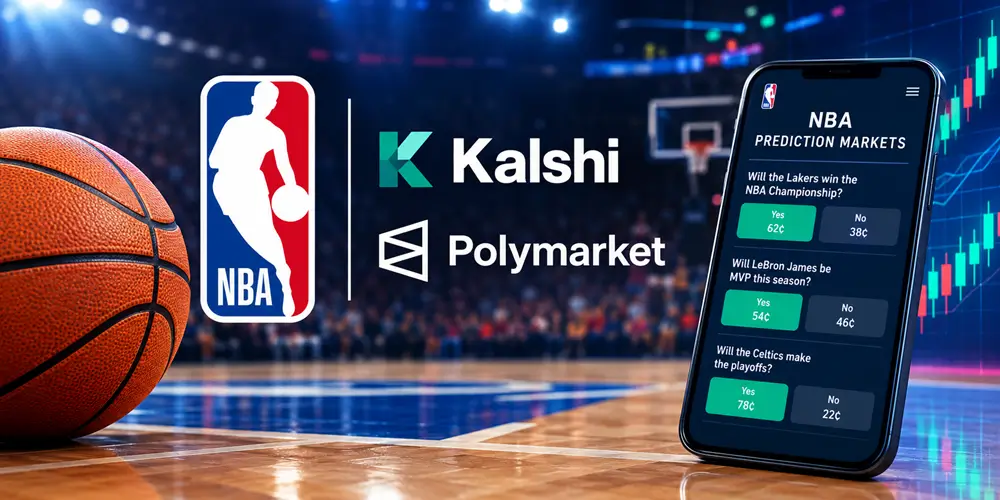
Major leagues are getting involved as well, as the NBA’s deals with Kalshi and Polymarket show. That mix of league deals and lawsuits makes this one of the fastest-moving areas of US betting law.
Traditional sportsbooks follow a different path. They need a license in each state where they take bets, and rules differ by state. You can compare state-licensed brands in our licensed US sportsbook reviews.
Legal status in this space can change within weeks. Confirm the rules in your state before you open an account on any platform.
No public evidence shows that other bettors can repeat Swiss Tony’s returns. A great result is not the same as a proven, repeatable edge.
Survivorship bias is a big reason. It means studying the winners while ignoring the many who tried the same thing and failed. Viral profit stories rarely show the accounts that went to zero.
Information is also incomplete. Outsiders see one wallet’s trades, but not its full risk, other accounts, or costs. Without that, nobody can judge whether the edge was skill, timing, or luck.
Conditions change too. Polymarket began charging fees on some sports markets on February 18, 2026. It widened them to most sports on March 30, which changes the math for a strategy earning under 2%.
Edges also shrink once other traders spot them. Copying an anonymous wallet is no fix, because you only see its trades after they happen, often at worse prices. So skip large deposits based on a screenshot or a viral post.
A few checks before your first trade can save you money. Use this list as a starting point.
Most platforms offer limits and time-outs, and many sportsbooks offer self-exclusion. Our guide to responsible gambling tools explains how deposit limits, cool-offs, and self-exclusion work. If gambling stops being fun, call or text 1-800-GAMBLER for free, confidential support.
Swiss Tony’s reported $12 million shows what a high-volume, thin-margin approach produced for one account. The FT data also shows that 68% of users who wagered over $100 lost money in the same period.
Both facts can be true at once. A single standout account is not a strategy you can copy, and a market price is not a promise.
If you bet on football this season, start with the basics in our NFL betting guide. Learn how prices and odds work, set your limits, and keep your stakes small.
Polymarket US is a CFTC-regulated exchange and offers sports contracts in many states. However, several states, including Ohio, say these contracts are unlicensed gambling, and court cases are ongoing as of October 2026. Polymarket’s global site blocks US users entirely. Check your own state’s current position before you sign up, because the rules are changing quickly.
Swiss Tony is the nickname for “swisstony,” an anonymous Polymarket account. The Financial Times named it the platform’s top earner since April 2026. The FT describes the holder as a sports gambler. No report has identified who runs the account, and the username says nothing reliable about them.
A Polymarket price converts directly into a percentage chance. For example, 62¢ means about 62%, which equals roughly -163 in American odds. A sportsbook builds its margin into the odds, while Polymarket charges a separate taker fee on many sports trades. Compare the full cost, not just the headline number.
Yes, Polymarket US lists NFL markets alongside other major US sports, where your state allows it. You buy shares in outcomes such as which team wins a game. Each winning share pays $1. NFL contracts include game winners, point spreads, and over/under totals.
Yes. A price only reflects what traders expect at that moment, and upsets happen every week. A team priced at 80¢ still loses about one time in five. Thin markets can also show stale or jumpy prices, so a low volume of trading makes the number less reliable.
 Alex Harper • 10 min
read
 Alex Harper • 10 min
read
 Alex Harper • 10 min
read
 Alex Harper • Oct 27, 2026
 Lara Johns • Oct 27, 2026
 Alex Harper • Oct 26, 2026
 Alex Harper • Oct 26, 2026