Steve Wynn Golden Nugget Talk Looks Back at The Mirage
 Alex Harper • Oct 26, 2026

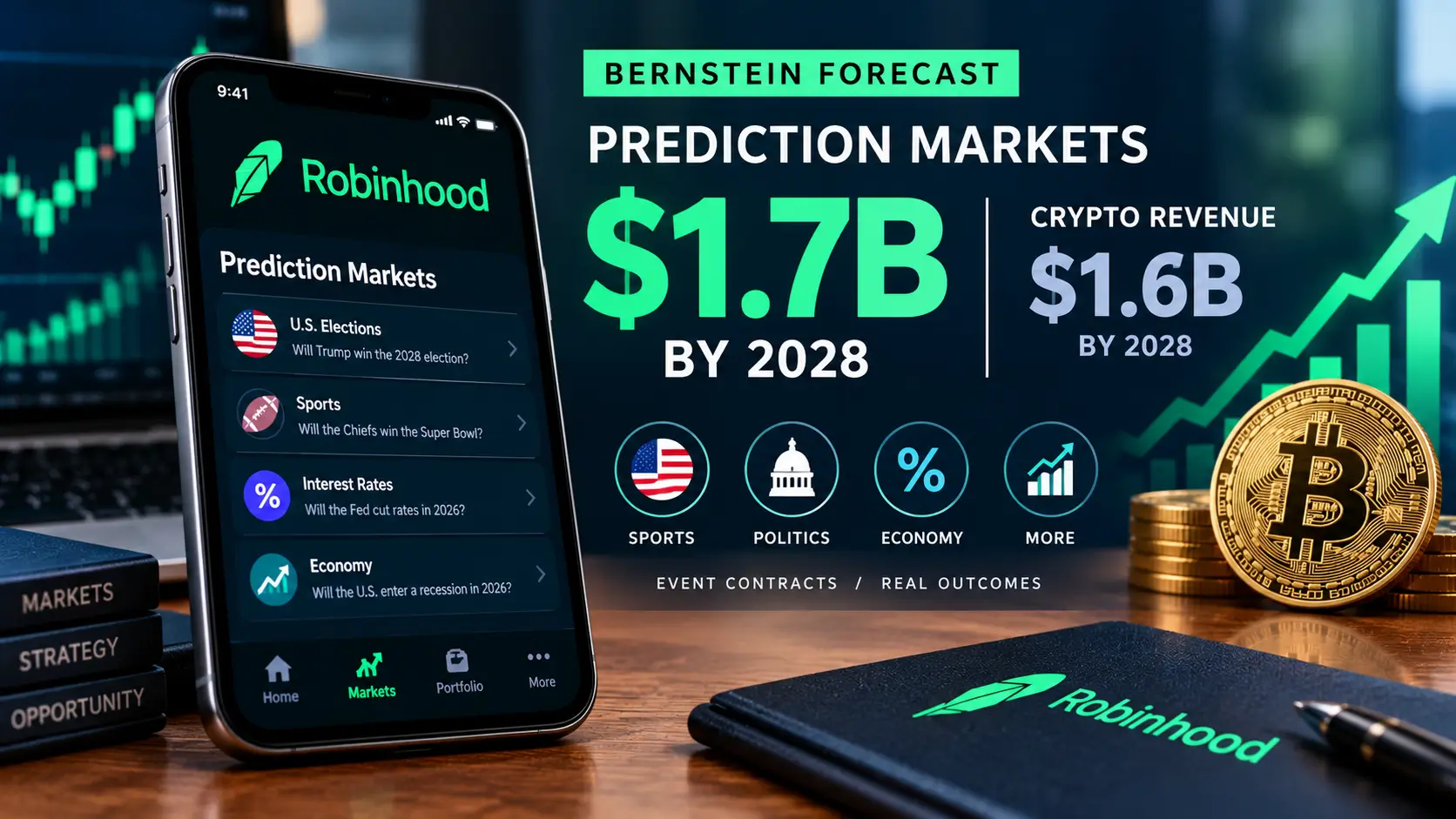
Wall Street firm Bernstein expects Robinhood prediction markets to bring in $1.7 billion a year by 2028. That figure would beat the $1.6 billion Bernstein expects from Robinhood’s crypto business.
Fact checked by Paige Williams
Editorial Statement: At CasinoUS, we independently review and select the online casinos featured on our site. We assess each operator using consistent criteria covering licensing, security, payments, payouts, bonuses, games, customer support and responsible gambling.
We may earn commissions when readers use certain affiliate links. However, commercial relationships do not determine which casinos we feature or how we evaluate them. We highlight both strengths and limitations so that US players can make more informed decisions.
Event contracts now compete directly with traditional sportsbooks for US bettors’ money. This guide explains the numbers, how the contracts work, and where they differ from a regular bet.
Bernstein shared its updated Robinhood outlook just before the company’s Q3 report, and the table summarizes its projections.
| Bernstein estimate | 2026 | 2028 |
| Prediction market revenue | About $650M | About $1.7B |
| Crypto revenue | Not given | About $1.6B |
| Total Robinhood revenue | Not given | About $9.4B |
| Prediction markets’ share of revenue | Not given | About 18% |
Every number here is a Bernstein projection, not a Robinhood target.
The firm also lifted its sales estimates for 2026 through 2028 by between 3% and 4% a year. However, it kept its stock target at $160, while HOOD traded around $93 on October 26.
Notably, Robinhood prediction markets already outperformed crypto during the most recently reported quarter. In Q2 2026, Robinhood earned $156 million from event contracts, over 10x the year-earlier figure. In contrast, crypto trading brought in $100 million that quarter, a 38% drop.
An event contract turns a question with two possible answers into something you can trade. Call it correctly and each contract pays $1; miss, and it pays zero.
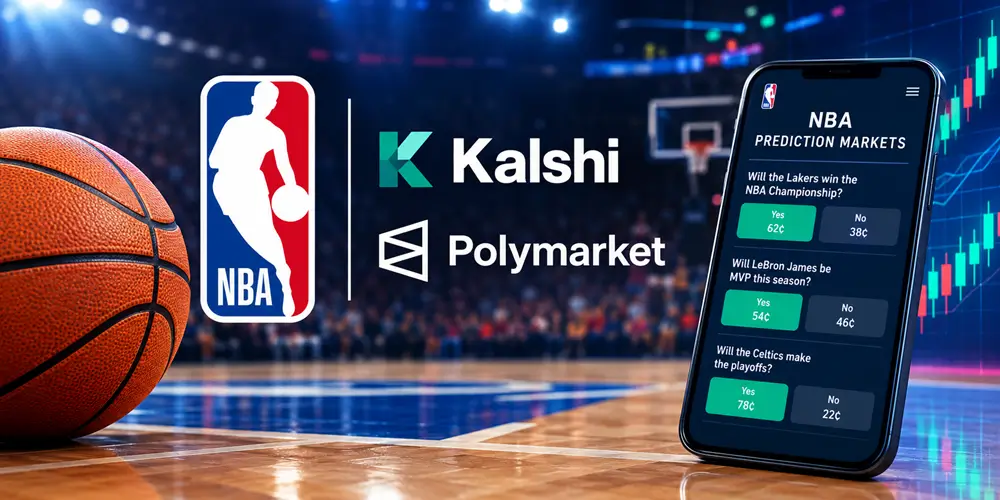
The contract price reflects the market’s collective view of the probability. For example, a Yes contract at 62 cents implies about a 62% chance. Should the event happen, you collect $1, which is 38 cents of profit before fees.
Also, you can sell before the event ends to lock in a gain or cut a loss. The price works like implied probability, the same idea that helps you understand sports betting odds. Robinhood prediction markets cover NFL games, elections, interest rates and economic data.
Both products let you back an outcome, but their rules differ sharply, as the comparison table below shows.
| Feature | Event contract (Robinhood, Kalshi) | Licensed sportsbook |
| Regulator | CFTC, a federal agency | State gaming regulator |
| What moves the price | Buyers and sellers | The sportsbook |
| Who you play against | Other traders | The house |
| Exit early | Sell any time the market is open | Cash out only where offered |
| Minimum age | 18+ on Robinhood and Kalshi | Usually 21+, set by each state |
| Where it’s available | Nationwide, but sports contracts face state challenges | Only states with legal betting |
That clash between federal and state rules sits at the heart of the court fights. Specifically, the Third Circuit sided with Kalshi, while the Ninth and Sixth Circuits backed the states. As a result, the dispute could eventually reach the Supreme Court.
Meanwhile, legal sports betting sites still answer to a state regulator if a dispute goes wrong.
Robinhood isn’t the only major financial company backing this growing market. On October 26, S&P Dow Jones Indices chose Kalshi as a go-to venue for trading on its stock gauges. Additionally, the index firm may design new gauges from Kalshi’s trading data.
Similarly, Kalshi is phasing in Nasdaq’s trade-monitoring system to strengthen market surveillance. The NYSE’s parent company pledged as much as $2 billion for a Polymarket stake in October 2025. Sports leagues are joining too, as the NBA’s Kalshi and Polymarket deal shows.
New platforms keep arriving, and the ProphetX approval earlier in 2026 showed regulators still welcomed newcomers.
More money in event contracts means more markets, tighter prices and more apps. Still, the product carries risks that sportsbook players may not expect.
Decide on a spending limit before you start, then stick to it consistently. If trading starts to feel compulsive, responsible gambling tools like deposit limits and time-outs can help.
The next test arrives late on October 27, 2026, when Robinhood posts its Q3 numbers. Bernstein’s model calls for $1.5 billion or so in sales, 13% above Q2. As a result, the Robinhood prediction markets figure will show whether the 2028 forecast looks realistic.
 Alex Harper • 10 min
read
 Lara Johns • 10 min
read
 Alex Harper • 10 min
read
 Alex Harper • Oct 26, 2026
 Lara Johns • Oct 26, 2026
 Alex Harper • Oct 22, 2026
 Alex Harper • Oct 22, 2026