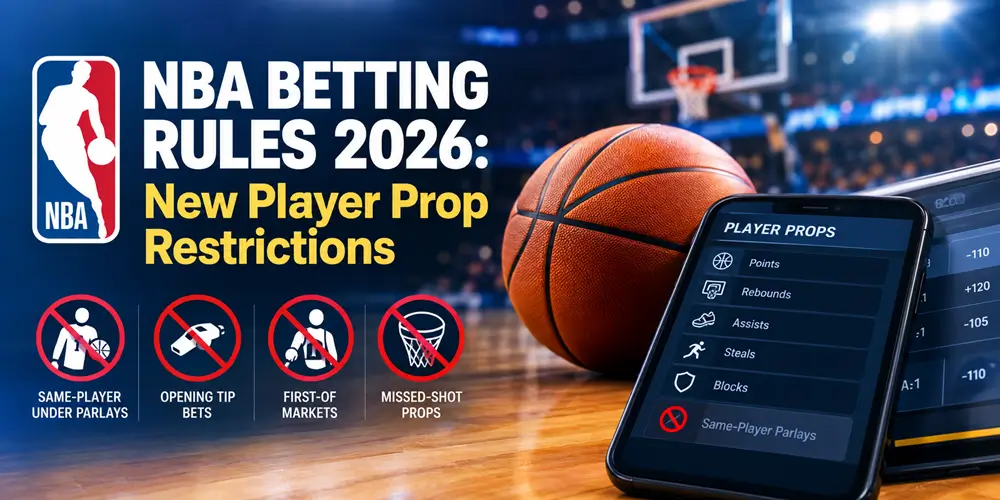
NBA Betting Rules 2026: New Player Prop Restrictions
 Lara Johns • Oct 20, 2026

Knowing how to talk to kids about gambling, often called the gambling talk, matters more in 2026. Youth gambling now starts on smartphones, where betting apps sit one tap away. Yet only 51% of US parents with children aged 6 to 17 have had this conversation.
Fact checked by Dave Cooper

Editorial Statement: At CasinoUS, we independently review and select the online casinos featured on our site. We assess each operator using consistent criteria covering licensing, security, payments, payouts, bonuses, games, customer support and responsible gambling.
We may earn commissions when readers use certain affiliate links. However, commercial relationships do not determine which casinos we feature or how we evaluate them. We highlight both strengths and limitations so that US players can make more informed decisions.
Another 40% plan to, while 9% have no plans. These figures come from a new Harris Poll that the National Council on Problem Gambling (NCPG) commissioned. So this guide gives you age-by-age talking points, warning signs, and the helpline to keep handy.
The gambling talk works best when you start early and keep it relaxed.
Betting content is now difficult for kids to avoid. For instance, sports broadcasts display live odds, and streamers play casino games for young fans. Also, spending on sports betting ads keeps climbing, so this exposure is unlikely to fade.
Many parents underestimate how early children start. For example, a Common Sense Media study found 36% of boys aged 11 to 17 gambled last year. However, most of their parents had no idea.
In the NCPG poll, fathers worried most: 75% said they fear kids betting, against 42% of mothers.
The gambling talk should evolve as your child grows, so match the message to what they actually see.
| Age | Where They See Gambling | Key Message | Conversation Starter |
| 6 to 9 | Game prize wheels, scratch cards | Games of chance make most people lose | “Why does the game give you free spins?” |
| 10 to 13 | Loot boxes, gaming streamers | Paying for a random prize works like gambling | “What did that loot box cost you?” |
| 14 to 17 | Betting apps, friends’ bets | Betting is illegal at their age | “Has anyone at school placed a bet?” |
Loot boxes are paid mystery prizes inside video games. Like slots, they use random rewards to keep players spending.
Older teenagers need the legal facts. The legal gambling age in each state varies by product. Still, most states set the minimum age at 21 for sportsbooks and online casinos.
Teen gambling often hides behind ordinary phone use, so look for patterns, not single events.
One sign alone doesn’t prove a problem, so use it to open the gambling talk rather than an argument. However, several signs together often match the early signs of a gambling addiction, which look similar in teenagers and adults.
A calm, curious tone encourages kids to open up, while a lecture shuts them down. First, use a natural moment, like a betting commercial, to ask what they think. Next, listen more than you talk, because children who feel judged tend to hide things.
Also, be honest about the odds: almost every casino game carries a house edge, the built-in profit the casino keeps. As a result, showing kids why gamblers tend to lose over time turns that edge into simple math.
If you gamble yourself, your habits teach more than any speech. Set your own deposit limits and time-outs, and let your children see you stick to them.
If you’re worried about a child, free help is available around the clock. Call or text the NCPG’s National Problem Gambling Helpline at 1-800-MY-RESET. Our guide to responsible gambling in the US lists state programs and support groups.
The gambling talk doesn’t need to be perfect, but it does need to happen early and more than once. So pick one moment this week, ask one honest question, and keep talking.

 Alex Harper • 10 min
read
 Alex Harper • 10 min
read
 Alex Harper • 10 min
read
 Lara Johns • Oct 20, 2026
 Alex Harper • Oct 20, 2026
 Alex Harper • Oct 20, 2026
 Alex Harper • Oct 19, 2026