Novig Sues Missouri: What It Means for Bettors
 Alex Harper • Oct 20, 2026

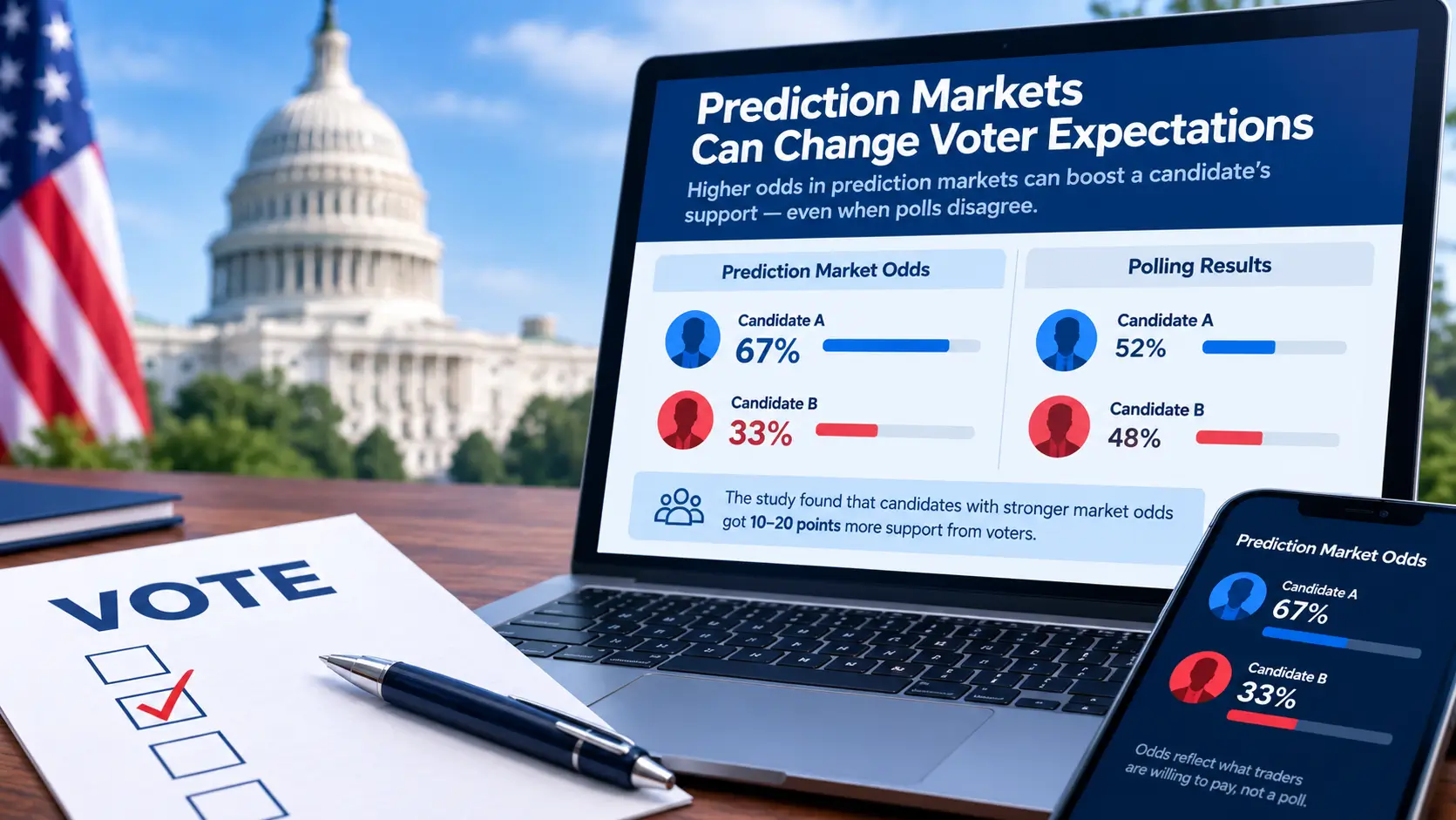
Odds from prediction markets change which candidate voters expect to come out on top. To test this, Brennan Center researchers polled nearly 2,000 people registered to vote. Candidates with stronger Kalshi odds got a 10-20 point boost in how many voters picked them to win.
Fact checked by Paige Williams
Editorial Statement: At CasinoUS, we independently review and select the online casinos featured on our site. We assess each operator using consistent criteria covering licensing, security, payments, payouts, bonuses, games, customer support and responsible gambling.
We may earn commissions when readers use certain affiliate links. However, commercial relationships do not determine which casinos we feature or how we evaluate them. We highlight both strengths and limitations so that US players can make more informed decisions.
That pattern held even when polling disagreed. With at least $220 million on 2026 midterm contracts, news networks like CNN now feature these odds. Here’s what the findings mean for bettors.
On a prediction market, people trade shares linked to a question, like who wins a Senate race. When the event settles, a correct share pays $1 and a wrong one pays nothing. Because of this, the price reads like a probability, so a 67-cent share signals roughly a 67% chance.
Pollsters ask a slice of the electorate about their voting plans, using methods refined over decades. In contrast, market prices only show what traders will pay.
| Feature | Traditional Polls | Prediction Markets |
| Source of the figure | Answers from a group of voters | Prices set by people trading shares |
| What it tracks | Voting intentions | What bettors expect to happen |
| Money behind it | No money wagered | Real money, with backers not disclosed |
| Voters who call it accurate | 37% | 19% |
| Voters who say it reflects the public | 55% | 29% |
The study used a simple experiment to isolate the effect of market odds. Every participant, surveyed in September 2026, judged five matchups between invented congressional hopefuls. Every profile listed party, age, race and career background, plus win chances from NBC News polls and Kalshi.
Researchers randomized the poll figures and the Kalshi odds in each matchup. As a result, they could see which source voters followed whenever those signals clashed.
Higher Kalshi odds pulled voters toward a candidate, while lower odds pushed them away. The table compares each result with a candidate holding 50% odds.
| Kalshi Odds | Change in Voters Picking That Candidate |
| 84% | +20 points |
| 67% | +10 points |
| 33% | -11 points |
| 16% | -19 points |
Notably, the odds moved opinions as strongly as polls and outweighed every candidate trait, from race to work history.
The biggest finding is the gap between what voters believe and how they act. Just 19% rated election markets as reliable, yet the prediction markets voters doubt still shaped their picks. When researchers cautioned some voters about these markets, their reliance on those odds held steady.
Smaller races face the greatest risk. Few state and down-ballot races get regular polls, so a market price may be the only number voters see.
A clear majority of voters supports more regulation.
Meanwhile, legal challenges keep multiplying. Minnesota tried to outlaw these platforms, but a US district judge paused the ban days before its start date. Federal oversight faces pressure too, as recent criticism of the CFTC’s role shows.
The federal ProphetX approval shows new platforms keep arriving. For now, states and the CFTC still dispute whether US gambling laws apply to these markets.
The prediction markets voters see on screen reflect bets other people placed, not forecasts. Before you trust those odds, run these checks:
News-driven markets bring different risks, as Kalshi’s LeBron James market showed when odds jumped minutes before the public report. If you prefer traditional wagers, state-licensed sports betting sites run under a separate set of rules. Either way, set deposit limits and time-outs before you bet.
Major networks now air prediction market prices, and they sway expectations even among skeptics. Until courts and regulators settle the rules, read every on-screen price as a bet, not a poll.
 Alex Harper • 10 min
read
 Lara Johns • 10 min
read
 Alex Harper • 10 min
read
 Alex Harper • Oct 20, 2026
 Alex Harper • Oct 19, 2026
 Alex Harper • Oct 19, 2026
 Lara Johns • Oct 15, 2026