Underdog Sues Tennessee Over Prediction Markets
 Alex Harper • Oct 19, 2026

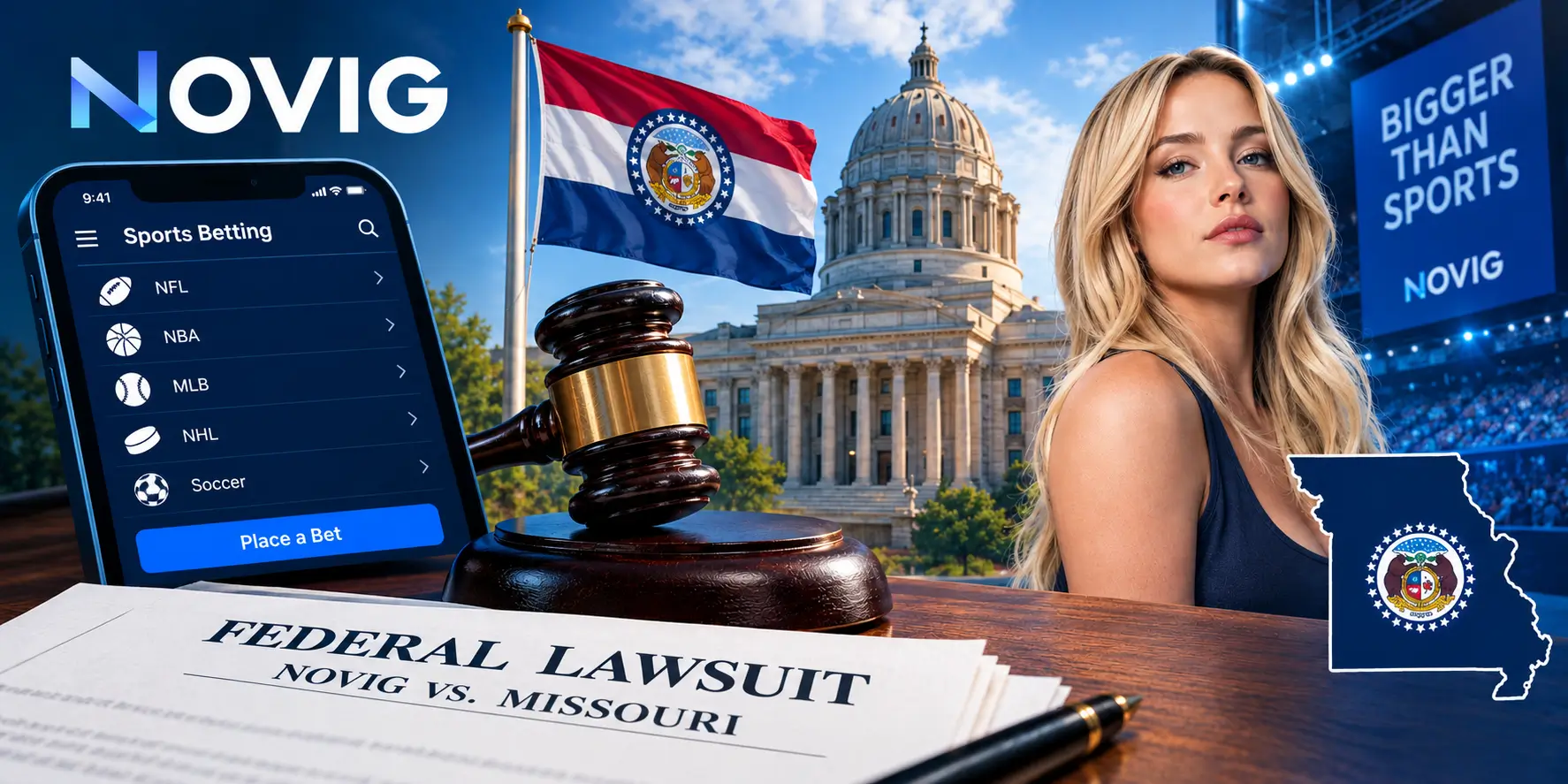
Prediction market operator Novig sues Missouri in a federal case it filed on Friday, October 16, 2026. Novig wants a judge to bar the state from classing its game contracts as illegal wagering. If Novig wins, Missourians could keep trading on games outside the state’s licensed system.
Fact checked by Dave Cooper
Editorial Statement: At CasinoUS, we independently review and select the online casinos featured on our site. We assess each operator using consistent criteria covering licensing, security, payments, payouts, bonuses, games, customer support and responsible gambling.
We may earn commissions when readers use certain affiliate links. However, commercial relationships do not determine which casinos we feature or how we evaluate them. We highlight both strengths and limitations so that US players can make more informed decisions.
Below, Casino US covers the lawsuit, how prediction markets work and the rulings that matter next.
The fight moved from a warning letter to court in a month.
In September, Catherine Hanaway, Missouri’s attorney general, told six prediction market firms to pull their sports contracts. Each had until October 17 to secure a state license and accept Missouri’s 10% betting tax, or leave.
Instead of complying, Novig took Hanaway and two state gaming regulators to federal court in St. Louis. Crypto.com brought a similar case across the state that same Friday. Counting Missouri, Novig has now sued six states since August, including New York, Washington and Massachusetts.
The case turns on one question: who regulates sports event contracts?
Novig started as a betting exchange, tried sweepstakes, then made its prediction market debut in August. In June, the CFTC, the nation’s futures and commodities regulator, signed off on it as a federal exchange. Novig says that approval puts its sports markets beyond Missouri’s reach.
In contrast, Hanaway’s office says a bet on a game counts as sports betting on any platform. Also, Missouri’s licensed books have handled roughly $2 billion since their December 2025 launch.
However, the courts haven’t settled the issue. Earlier in 2026, the 3rd Circuit ruled for Kalshi, but the 6th Circuit backed state regulators. As a result, how US gambling laws treat event contracts depends partly on which appeals court covers a state.
Missouri sits in the 8th Circuit, the federal appeals court now hearing an Iowa case on the same issue.
The two look similar on screen but work differently.
Prediction market users trade contracts that pay $1 if an outcome happens and $0 if it doesn’t. Bettors familiar with reading sports betting odds can treat a 60-cent price as a 60% chance.
| Feature | Licensed Sportsbook | Prediction Market |
| Regulator | Missouri Gaming Commission | CFTC (federal) |
| Who you bet against | The sportsbook | Other users |
| Minimum age | 21 | 21 at Novig, 18 elsewhere |
| Missouri tax | 10% of gross receipts | None paid to Missouri |
| Missouri license | Required; fees reach $500,000 | None held |
Notably, age checks are central to the state’s case. Hanaway claims five of those six operators can’t reliably keep out users younger than 21. That matters because the legal gambling age for Missouri sportsbooks is 21, the same floor Novig sets.
While Novig sues Missouri in court, its marketing draws just as much attention.
Actress Sydney Sweeney took an equity stake in Novig in September and fronts its ads. However, her first spot drew criticism from female athletes. Even so, Novig released a second Sweeney ad on October 10.
According to AdAge, Novig reports a 361.8% jump in first-time depositors after the debut ad. Casino US hasn’t checked that number on its own.
Nothing changes overnight, but three things will shape what Missourians can use:
If you bet in Missouri, licensed sportsbooks answer to a state regulator when disputes come up. Before trying a prediction market, compare it with licensed sports betting sites on age checks, payouts and complaint handling. Whichever you pick, set deposit limits with responsible gambling tools.
As Novig sues Missouri, it’s betting that federal courts will back the CFTC over the state. Until a judge or the 8th Circuit rules, prediction markets in Missouri stay in a legal gray zone.
 Lara Johns • 10 min
read
 Alex Harper • 10 min
read
 Alex Harper • 10 min
read
 Alex Harper • Oct 19, 2026
 Lara Johns • Oct 15, 2026
 Alex Harper • Oct 15, 2026
 Alex Harper • Oct 15, 2026