Saracen Casino Executives Face Firing Over GamePhysics
 Alex Harper • Sep 28, 2026
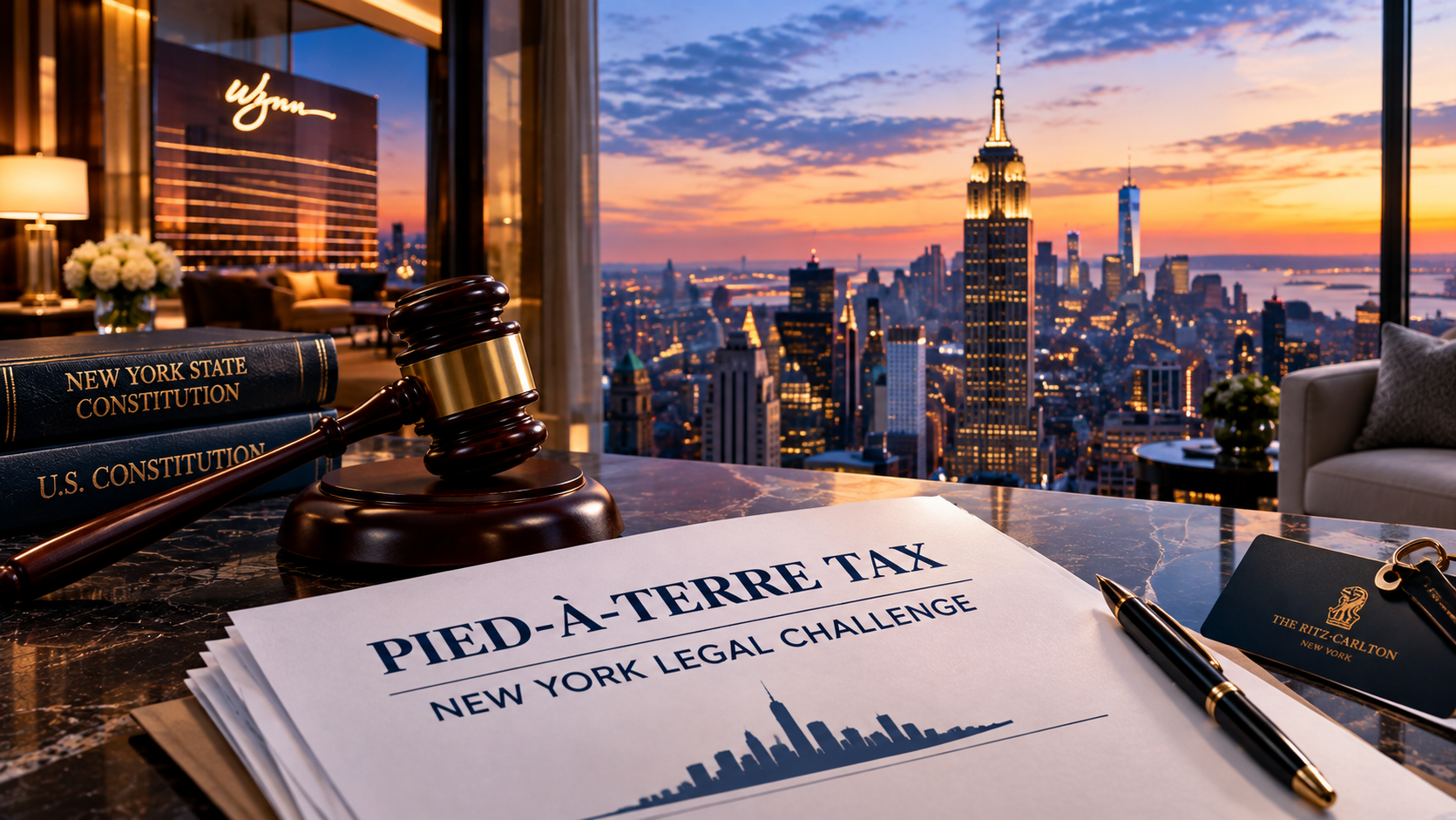

Former casino boss Steve Wynn has taken New York to court over its new pied-à-terre tax. Wynn and Wilbur Ross, Trump’s first-term commerce chief, say it breaks the state and US constitutions. The Steve Wynn pied-à-terre tax case landed one day before a court ruling threw the city’s rollout into chaos.
A pied-à-terre is a secondary residence that its owner does not occupy full time. New York’s pied-à-terre tax adds an annual surcharge to these properties across the city.
The surcharge applies to non-primary homes worth $5 million or more, or $1 million for co-ops and condos.
Governor Hochul signed the measure after legislators passed it in May. The levy has applied since July 1, and the city expects $500 million or more each year.
Wynn and the Rosses filed the case on September 28 in Suffolk County Supreme Court. All three live in Florida but own homes in New York.
The complaint argues that:
According to the filing, Wynn faces a surcharge of about $183,095, while the Rosses owe roughly $83,532.
Wynn built his fortune on Las Vegas resorts like the Mirage and Wynn Las Vegas. That run makes him one of the biggest names in the history of casino gambling. He left the casino business in 2018, and Wynn Resorts CEO Craig Billings now runs the company he founded.
Since then, Wynn has focused on luxury real estate, including a two-level Ritz-Carlton home in Manhattan bought in 2012.
He paid $70 million for it and has now relisted it at that same price. Yearly carrying costs sit near $565,000.
Each case takes a different angle:
| Case | Who Filed | Main Argument | Status |
| Staten Island rollout case | Three NYC homeowners | The city flagged owners unfairly | Judge ordered a restart on Sept. 29; city appealed |
| Ross v. State of New York | Steve Wynn and Wilbur and Hilary Ross | The tax targets nonresidents and breaks a tax cap | Filed Sept. 28 in Suffolk County |
| Suffolk County homeowners’ suit | Homeowners and a co-op | It targets nonresidents and applies retroactively | Filed Sept. 29 |
Justice Wayne Ozzi found the city’s tax office violated homeowners’ due process rights. Due process means the government must follow fair procedures before collecting money from owners.
That July, officials mailed roughly 17,000 warnings without reviewing anyone’s state tax returns. It also posted an online roll naming over 900,000 properties.
The judge told the city to scrap those letters, pull the roll, and restart. However, he made no call on whether the pied-à-terre tax is lawful.
The city appealed that evening, automatically putting the judge’s order on hold. As a result, officials can keep moving ahead with the surcharge during the appeal.
Next steps to watch:
Meanwhile, Mamdani’s office vows to keep fighting. His spokesperson argues that owners of luxury second homes can afford their fair share.
For most players, the Steve Wynn pied-à-terre tax fight will not change a single wager. Still, it shows how casino money shapes battles beyond the gaming floor.
Wynn made his name courting big spenders, the same crowd that chases VIP perks at high roller casinos today. Casino leaders keep making headlines off the floor too, as the Fertitta and Caesars deal showed this summer.
If you plan to play, stick with licensed real money casino sites that list their terms clearly. Before you deposit, set a budget with our responsible gambling tools.
 Alex Harper • 10 min
read
Alex Harper • 10 min
read
 Alex Harper • 10 min
read
Alex Harper • 10 min
read

 Lara Johns • 10 min
read
Lara Johns • 10 min
read
 Alex Harper • Sep 28, 2026
  Alex Harper • Sep 28, 2026
  Lara Johns • Sep 28, 2026
  Alex Harper • Sep 25, 2026
 Editorial Statement: Casino US is your trusted source for timely industry updates, in-depth analysis, and honest operator reviews. Our editorial team brings years of specialized gaming industry knowledge to every story, holding ourselves to strict standards of accuracy and objectivity. We're dedicated to providing straightforward, unbiased, and reliable reporting on the US gambling landscape and beyond.