The Most Expensive Sports Teams in the World in 2026
 Lara Johns • Aug 19, 2026

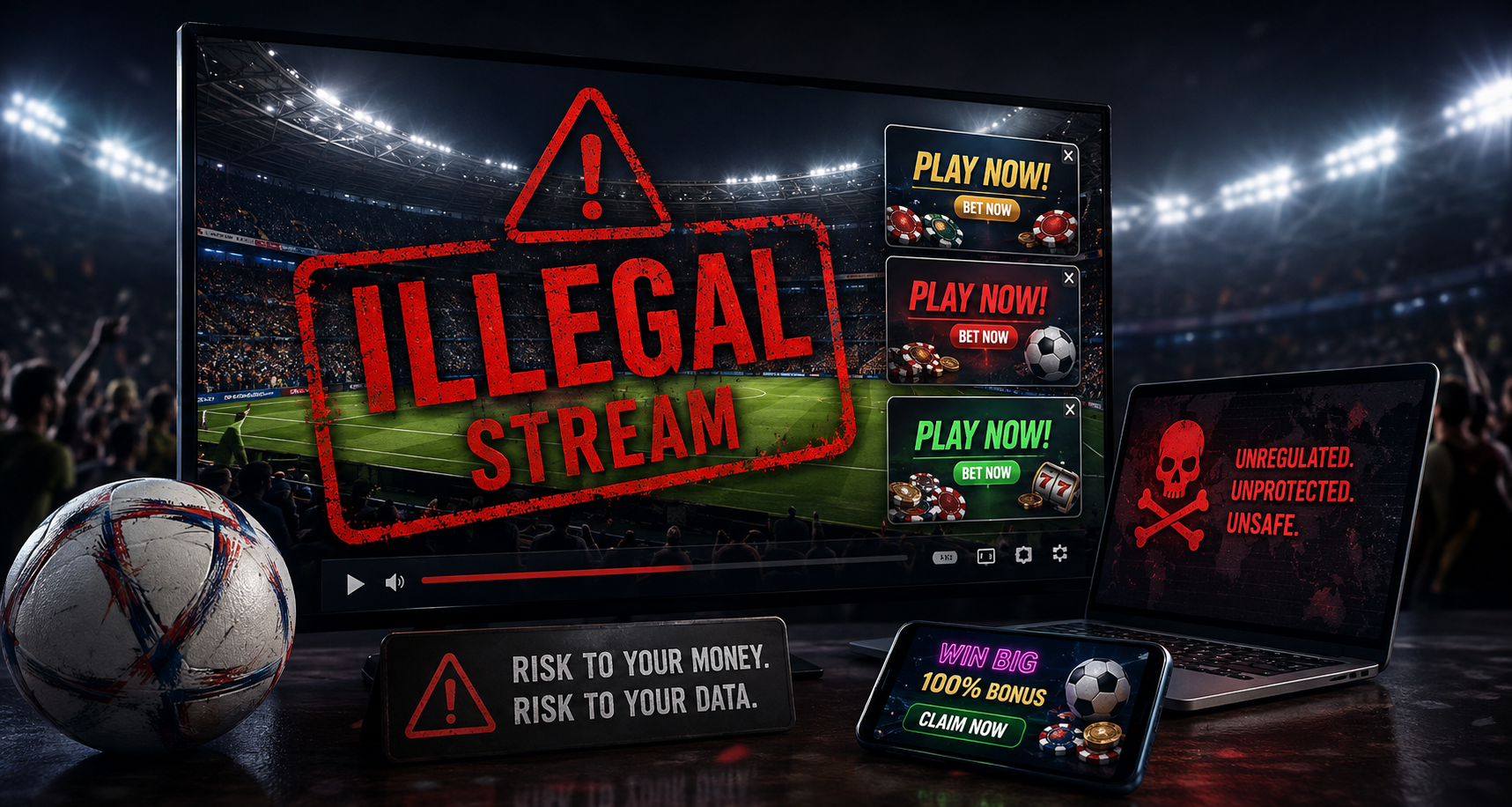

Illegal World Cup streams pulled in a jaw-dropping 174.3 billion views this summer, and 95% of them carried ads for unregulated gambling sites. That is not a coincidence. It is easy to see the appeal of watching the FIFA World Cup for free, and plenty of illegal sites offer free access to make that pitch.
Gaming Compliance International (GCI) just published the first full study on how illegal World Cup streams and offshore betting fed off each other during the tournament. If you watched a free stream during the World Cup, you probably saw more gambling ads than you realized. Here is what the numbers show, and what it means for US bettors.

GCI counted 174.3 billion “qualifying” illegal stream views across the tournament. A qualifying view means someone watched for at least 90 seconds, so refreshes, mirror links, and IPTV resets each count on their own. That makes it a stream-view total, not a count of unique people watching.
Some matches pulled in staggering numbers. The Spain vs. Argentina final alone drew 6.2 billion qualifying views. The average match pulled 1.68 billion, and even the third-place game between England and France hit 2.0 billion.
This is not a new pattern. GCI ran a smaller study on Great Britain before the tournament and found that unregulated gambling ads showed up on 89% of illegal sports streams in 2024 and the first half of 2025. The World Cup just proved the same setup works at a global scale.
The 95% figure comes down to money. GCI found that the sites running illegal World Cup streams often sign affiliate deals with unregulated gambling operators, earning between 25% and 50% of the net revenue those operators make from referred players.
That means a streamer does not just get paid once for showing an ad. It keeps earning every time the person it referred keeps losing money at that site. GCI President Ismail Vali summed it up this way: the streamer “can participate in the gambling losses of the viewer it converts into a customer.”
This is not limited to offshore sportsbooks, either. GCI’s monitoring found sweepstakes casinos, social casinos, and prediction markets operating outside US regulation buying ad space on the same illegal feeds. Vali called it an ecosystem, not a single website, which is why shutting down one pirate stream rarely solves the problem for long.
GCI estimated the World Cup generated $593 billion in global betting handle, the total amount wagered worldwide. Of that, $409 billion, or 69%, moved through unregulated platforms. Only $184 billion, 31%, went through licensed, regulated sportsbooks.
In the US, this ties into what GCI calls a $67 billion shadow betting market: cash that flows through offshore and unlicensed sites, fed in part by illegal World Cup streams, even though legal sports betting now runs in most states.
The United States led the response. Operation Offsides, run by the Department of Justice with help from the Alliance for Creativity and Entertainment, FIFA, and rights holders including NBCUniversal and Warner Bros., seized more than 1,000 domains and blocked nearly 2,000 more used for unauthorized streaming of FIFA World Cup matches over the course of the tournament. The Trustworthy Accountability Group separately cut ad revenue to close to 1,400 more sites.
All of it leans on the Protecting Lawful Streaming Act, a 2020 federal law that turned large-scale unauthorized streaming from a misdemeanor into a felony. Officials called Operation Offsides one of the largest anti-piracy operations ever tied to major sporting events, built with help from legitimate streaming services, rights holders, and law enforcement partners across dozens of countries.
GCI’s analysis also flagged a risk that has nothing to do with betting. The “click to watch in HD” or “watch in 4K” buttons found on illegal World Cup streams can hide malware, spyware, and keystroke loggers. A free stream can end up costing a viewer their passwords or banking details, on top of any money lost to an unlicensed sportsbook.
Here is how a licensed US sportsbook stacks up against an unregulated offshore site on the things that actually matter to a bettor.
| What You Get | Licensed US Sportsbook | Unregulated Offshore Site |
| Oversight | A state gaming regulator checks operations | No regulator checks anything |
| Your Funds | Segregated and protected by law | No legal protection if the site disappears |
| Dispute Help | A state complaint process is available | No formal way to dispute a decision |
| Responsible Gambling Tools | Deposit limits and self-exclusion required | Rarely offered, rarely enforced |
| Legal Recourse | Courts and regulators can act | Little to no recourse for US customers |
You do not have to rely on illegal World Cup streams to catch the big matches. A few habits help:
Read the fine print before you claim a bonus. Unregulated sites often skip the deposit limits and self-exclusion tools that licensed sportsbooks are required to offer, so the safety net you would normally count on simply is not there.
The next major tournament will draw the same wave of illegal World Cup streams looking for the same payday. Betting with a licensed, regulated US sportsbook keeps your money protected and keeps that payday out of reach for the people running these operations.
 Alex Harper • 10 min
read
Alex Harper • 10 min
read
 Alex Harper • 10 min
read
Alex Harper • 10 min
read
 Lara Johns • 10 min
read
Lara Johns • 10 min
read
 Lara Johns • Aug 19, 2026
  Alex Harper • Aug 18, 2026
  Lara Johns • Aug 17, 2026
  Alex Harper • Aug 14, 2026
 Editorial Statement: Casino US is your trusted source for timely industry updates, in-depth analysis, and honest operator reviews. Our editorial team brings years of specialized gaming industry knowledge to every story, holding ourselves to strict standards of accuracy and objectivity. We're dedicated to providing straightforward, unbiased, and reliable reporting on the US gambling landscape and beyond.