Malik Beasley Gambling Case: What the Guilty Plea Means
 Alex Harper • Oct 28, 2026

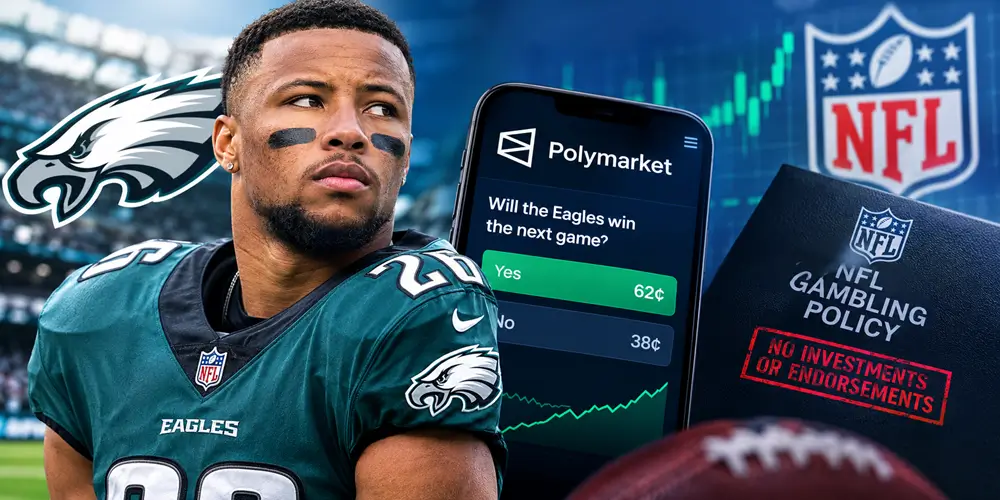
The Saquon Barkley Polymarket investment is over, and NFL rules ended it. The Eagles running back told Front Office Sports on October 28, 2026, that the league made him sell. NFL prediction market rules treat platforms like Polymarket the same as sportsbooks, so players can’t own or promote them.
Fact checked by Dave Cooper
Editorial Statement: At CasinoUS, we independently review and select the online casinos featured on our site. We assess each operator using consistent criteria covering licensing, security, payments, payouts, bonuses, games, customer support and responsible gambling.
We may earn commissions when readers use certain affiliate links. However, commercial relationships do not determine which casinos we feature or how we evaluate them. We highlight both strengths and limitations so that US players can make more informed decisions.
That position leaves the NFL on its own among major U.S. leagues. The NBA, MLB, NHL and MLS all have deals with Polymarket, Kalshi or both. Meanwhile, the NFL wants the U.S. Supreme Court to decide who regulates sports event contracts, a fight that could change how Americans bet on football.
The Saquon Barkley Polymarket sale comes down to one line in the NFL gambling policy. Here is what bettors need to know:
Saquon Barkley is one of the most productive running backs in the NFL. The New York Giants drafted him second overall in 2018. He signed with the Philadelphia Eagles in 2024 after six seasons in New York.
His first year in Philadelphia was historic. Barkley ran for 2,005 yards and won AP Offensive Player of the Year. He then helped the Eagles win Super Bowl LIX in February 2025.
Off the field, Barkley has built a name as an investor. In September 2025, The Profile reported he had backed more than 10 private start-ups. His checks usually ran from $250,000–$500,000.
Polymarket is a prediction market. Users buy and sell yes-or-no contracts tied to real events, from elections to NFL games.
For example, a contract might ask whether the Eagles will win on Sunday. If “yes” trades at 62 cents, the market puts the Eagles’ chances at roughly 62%. A correct contract pays $1, and a wrong one pays nothing.
A sportsbook works differently. It sets the odds and takes the other side of your bet. On a prediction market, traders deal with each other, and the platform earns money from fees.
Beyond that, regulation differs. Kalshi and Polymarket operate as exchanges under the Commodity Futures Trading Commission (CFTC), the federal agency that oversees futures trading. Licensed sportsbooks answer to gaming regulators in each state.
The Profile listed Polymarket among Barkley’s holdings in September 2025. At the time, it valued the company at about $1 billion. Barkley has not said why he invested, and the size, timing and sale terms of his stake are not public.
Still, the appeal is easy to see: sports drive a large share of prediction-market trading.
The NFL classifies prediction markets as gambling companies. Under its gambling policy, players can’t invest in them or endorse them.
Barkley told Front Office Sports that the league briefs players before every season on new rules. Those rules cover endorsements, investments and training, and they now include a ban on prediction-market deals. “I am not allowed to be in that,” Barkley said.
That said, the timeline matters. His Polymarket stake became public in September 2025. According to Front Office Sports, the league told players sometime between then and summer 2026 that these stakes were off-limits.
The league’s view isn’t new. In January 2026, an NFL Players Association (NFLPA) spokesperson said the league treats prediction markets as gambling entities. As a result, players can’t endorse companies like Kalshi or Polymarket.
On October 28, the NFL confirmed it bans players from investing in or promoting sportsbooks and prediction markets. However, the league declined to comment on Barkley’s specific case. Polymarket also declined to comment.
That leaves one gap. The policy is confirmed, but nobody has said Barkley broke it. His account suggests he invested before the rule reached prediction markets, then sold once it did.
The NFL Gambling Policy limits how players deal with betting companies. Based on what the league and NFLPA have confirmed, the rules work like this:
By contrast, the league’s own deals tell a different story. The NFL has official sportsbook partners in DraftKings, FanDuel and Fanatics, its newest betting partner. Even so, it has no prediction-market partners and blocked prediction-market ads during the Super Bowl.
Integrity drives the player rule. Players know things the public doesn’t, such as injury news. A player who owns part of a platform listing contracts on his own games has an obvious conflict of interest.
These two layers work separately. League rules are workplace rules, so breaking them brings NFL discipline. State and federal law decides which platforms can operate where, as our guide to U.S. gambling laws explains.
Every other major U.S. league has already partnered with prediction markets. Based on announced deals and Front Office Sports reporting, here is where each stands:
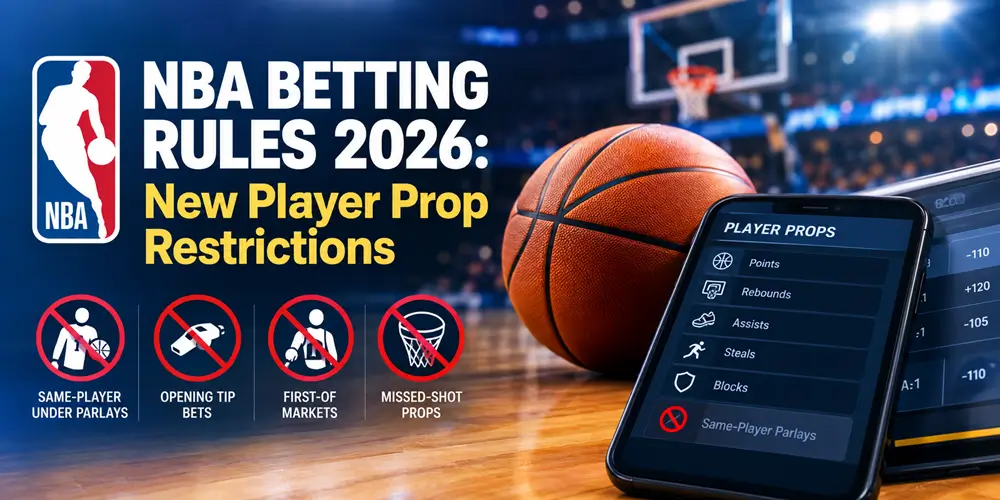
The NBA said yes with conditions. Players and league employees can’t trade on NBA contracts, and partners must follow the NBA’s new player prop restrictions. The NBA, NHL and MLB also share information with the CFTC.
Player rules split the same way. NBA players can invest in or endorse prediction markets, but they can’t promote NBA-related contracts. Giannis Antetokounmpo invests in Kalshi, while LeBron James has a football-focused Polymarket deal reportedly worth $15 million a year.
In short, the other leagues chose new revenue and a working relationship with federal regulators. The NFL chose a legal fight, though it has reportedly held private talks with both platforms and the CFTC. Our breakdown of the NBA’s Kalshi and Polymarket deals covers the other approach.
Barkley is the most prominent NFL player known to exit a prediction-market stake. Any active NFL player with a similar investment faces the same choice. How many hold one has not been disclosed.
Retired stars are a different case. Former NFL players Marshawn Lynch and Richard Sherman reportedly invested in Kalshi in April 2026.
As a result, athletes face a patchwork. Their options depend on the league, not the platform. So far, the NFL has announced no plans to relax its policy.
Prediction markets are now a major force in football betting. According to the NFL, its games made up $1.8 billion of $3.3 billion traded on opening Sunday.
For bettors, three differences from sportsbooks stand out:
The core dispute is whether states can enforce gambling laws against federally regulated exchanges. Two federal appeals courts disagreed, so New Jersey asked the Supreme Court to step in. Attorneys general from 39 states and Washington, D.C., backed New Jersey, as did 145 tribal nations and organizations.
On October 8, 2026, the NFL filed its own brief urging the court to act fast. Kalshi’s response is due November 9. Even so, nobody knows when, or whether, the court will take the case.
Both sides have a case. The NFL says the CFTC’s proposed sports rules fall short on integrity and consumer protection. In contrast, Kalshi says the CFTC actively polices sports markets, and Polymarket favors one federal framework over a state patchwork.
Sportsbooks are hedging, too. DraftKings, for instance, expanded its NBA deal to include prediction markets. If the states win in court, prediction markets could need a license in every state.
Whichever platform you use, set a dollar limit before you start and stop when you hit it. Free, confidential help is available 24/7 at 1-800-GAMBLER, and our responsible gambling guide explains how to set limits.
Barkley’s sale shows the NFL’s gambling rules have real teeth, even for its biggest stars. It also shows how far the NFL stands from every other major league.
Even so, the larger question is still open: who regulates sports event contracts. Until the courts settle it, the takeaway is simple. Whether a platform counts as gambling depends on who you ask, and in the NFL, the answer is yes.
 Alex Harper • 10 min
read
 Alex Harper • 10 min
read

 Lara Johns • 10 min
read
 Alex Harper • Oct 28, 2026
 Alex Harper • Oct 28, 2026
 Alex Harper • Oct 27, 2026
 Alex Harper • Oct 27, 2026