Sports Betting Advertising May Reach $7 Billion in 2027
 Alex Harper • Oct 19, 2026
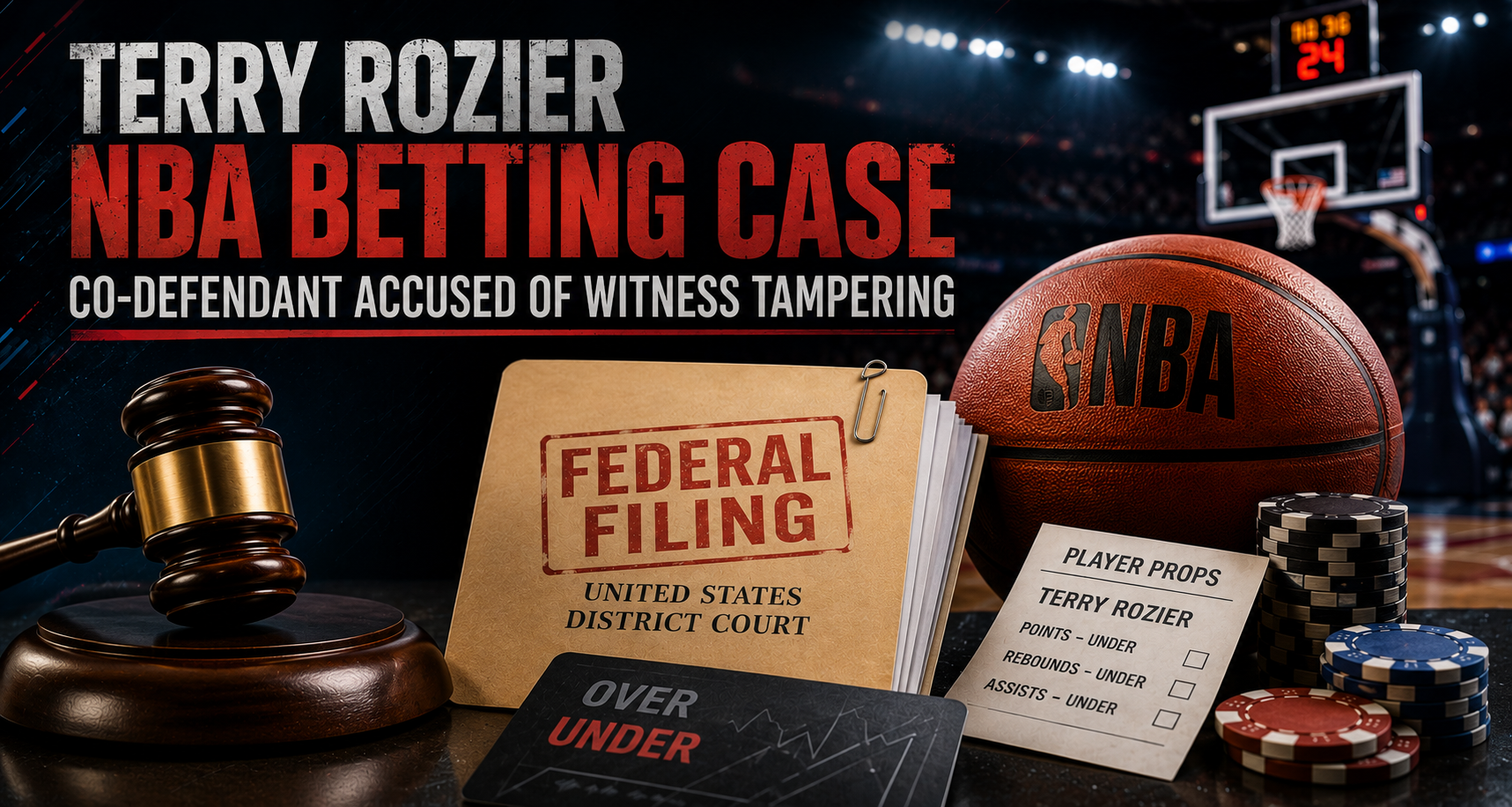
Deniro Laster is Miami Heat NBA player Terry Rozier’s childhood friend and co-defendant in the NBA betting case. Now Laster faces a new fight: staying out of jail before trial even begins. Federal prosecutors want a judge to cancel his bond. They say he broke his release rules and tried to weaken the case against him. Rozier is not named in any of the witness-tampering claims.
Fact checked by Dave Cooper
Editorial Statement: At CasinoUS, we independently review and select the online casinos featured on our site. We assess each operator using consistent criteria covering licensing, security, payments, payouts, bonuses, games, customer support and responsible gambling.
We may earn commissions when readers use certain affiliate links. However, commercial relationships do not determine which casinos we feature or how we evaluate them. We highlight both strengths and limitations so that US players can make more informed decisions.

The court filing lists two problems. The first is a phone call. Prosecutors say that around December 2025, Laster called another defendant. He allegedly said the group had a better chance if no one talked to investigators. Laster’s release rules say he can’t contact co-defendants without a lawyer present. Prosecutors say that call alone broke his bond.
The second problem involves social media. Investigators linked at least two rat-emoji posts to Instagram accounts tied to Laster. In the filing, prosecutors explain that “rat” is slang for a snitch or informant, someone who cooperates with police. They say the posts were meant to scare a possible witness.
An emoji might sound like weak evidence. But witness-tampering law doesn’t require a direct threat. Any action meant to stop someone from cooperating can count, even without naming that person. Prosecutors instead look at patterns. Who posted something? When did they post it? Would a reasonable person in the witness’s shoes see it as a warning, not just a coincidence?
That’s also why the filing brings up Laster’s reputation for owning guns. Prosecutors say witnesses already knew about this reputation. That knowledge, they argue, is what turned a simple emoji or phone call into a real threat instead of a harmless comment.
Revoking a bond means a judge cancels a defendant’s release and orders them held until trial. Prosecutors say this is the only way to stop Laster from contacting witnesses again and to protect the case. As of this filing, Laster’s attorney had not responded publicly to the claims.
None of this happens automatically. Federal law only lets a judge revoke someone’s release after a hearing. The government must also prove, with clear and convincing evidence, that a rule was broken. That’s a much higher bar than just making an accusation.
Even then, the judge isn’t done. They still must consider other options, like tighter monitoring or more check-ins. These could keep witnesses safe without full jail time. Only if nothing less strict would work does the judge order the defendant held until trial.
For Laster, this isn’t just a legal technicality. If he loses this motion, he could sit in jail for months before a jury is even picked. That kind of pressure often pushes defendants toward a plea deal long before trial.
Rozier is not accused of witness intimidation himself. But the filing does link him to Laster through a group prosecutors call GMB. They say GMB members, including both men, have publicly claimed access to guns.
Defense attorney David Markus rejects that idea completely. He says GMB simply stands for “Get More Blessings.” Rozier and his friends started using the phrase in high school, and his charitable foundation still uses it today. Markus says prosecutors are stretching to find a connection that isn’t real. He points out that Rozier has never faced a firearms charge or a witness-intimidation charge of his own.
Markus also points to older evidence to challenge Rozier’s alleged involvement in the betting scheme. In a 2023 message, Laster tells someone else not to tell Rozier, using his nickname “Chum,” about the bet. Markus says this proves Rozier didn’t know about the betting scheme. Prosecutors disagree. They argue the message probably has nothing to do with sports gambling at all.
The wider case centers on one game: the Charlotte Hornets versus the New Orleans Pelicans on March 23, 2023. Prosecutors say Rozier told Laster ahead of time that he planned to play worse than usual that night. Laster and other co-defendants allegedly used that tip to steer bettors toward wagers on Rozier falling short of his usual stats. Those bets added up to more than $258,700.
In May, a new indictment added a bribery charge to the case. Prosecutors say Rozier was paid about $100,000 for his part. But that payout reportedly shrank to about $70,000 after he grabbed four rebounds that night, which caused one bet to miss.
The bribery charge comes with another charge: honest services fraud. This charge usually applies when someone the public trusts, like a professional athlete, is accused of betraying that trust for personal gain. Rozier has pleaded not guilty to both charges. He and Laster have also pleaded not guilty to related charges of conspiracy, wire fraud, and money laundering.
A judge is expected to rule on the bond motion before the trial starts. The trial is currently set for February 8, 2027. If prosecutors win, Laster stays in custody until then. Rozier, for now, remains free under his current release terms. He faces no witness-tampering charge of his own.
More filings are likely as the trial date gets closer. The fight over Laster’s bond is an early test of how prosecutors build these cases. It involves athletes, their associates, and the bettors who acted on inside tips. It’s one more chapter in one of the most closely watched sports-betting cases in recent memory.
 Lara Johns • 10 min
read
Lara Johns • 10 min
read
 Alex Harper • 10 min
read
Alex Harper • 10 min
read
 Alex Harper • 10 min
read
Alex Harper • 10 min
read
 Alex Harper • Oct 19, 2026
  Alex Harper • Oct 19, 2026
  Lara Johns • Oct 15, 2026
  Alex Harper • Oct 15, 2026