Bill Simmons Betting Investigation: What Happened
 Alex Harper • Sep 2, 2026
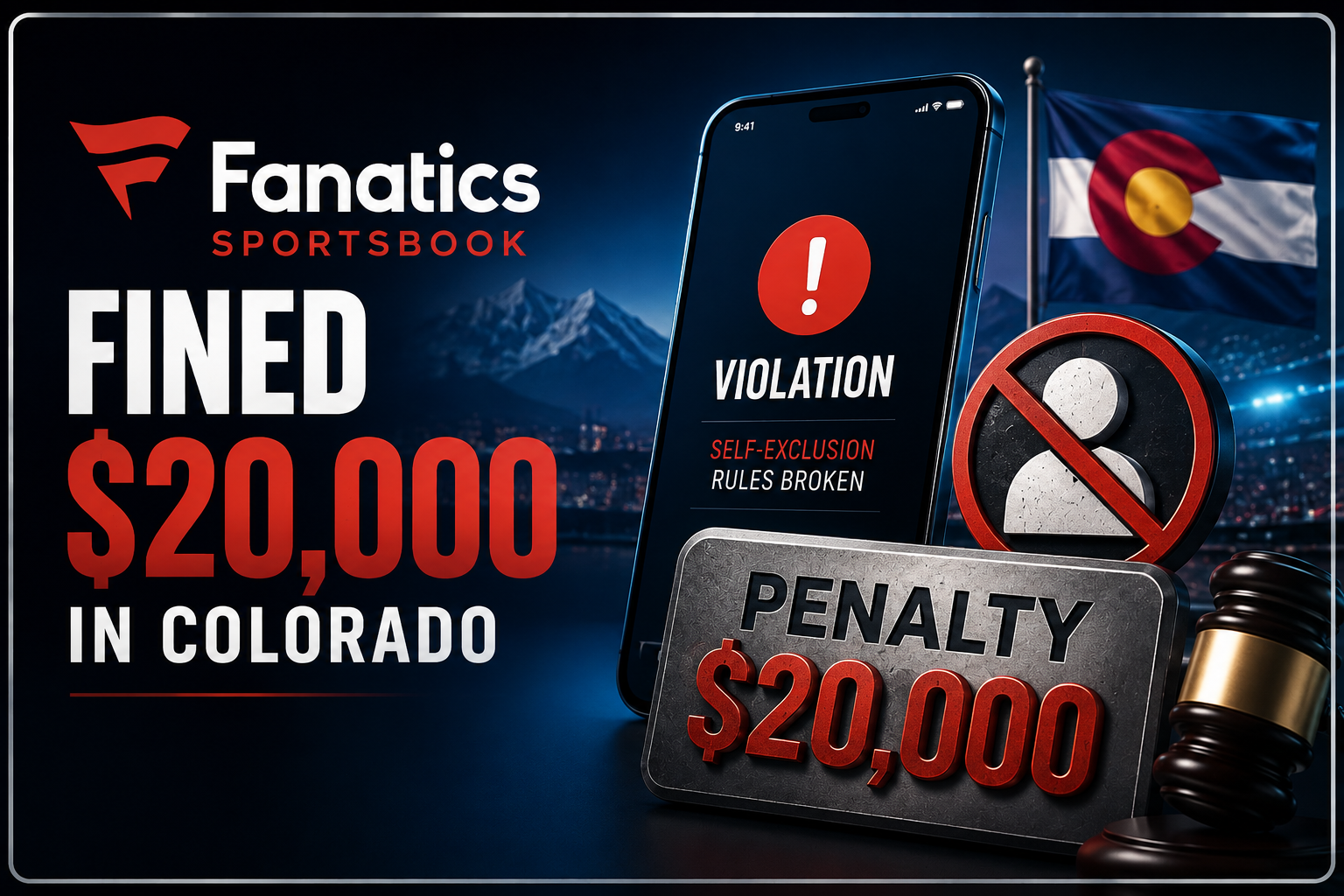

The Fanatics sportsbook fine totals $20,000, confirmed by the Colorado Limited Gaming Control Commission on August 27, 2026. Fanatics signed the underlying settlement agreement on June 10, 2026.
Two promotional texts to an already self-excluded bettor triggered the penalty. Fanatics admitted the violation and agreed to pay.
Self-exclusion lets a bettor voluntarily ban themselves from betting apps for a set period, sometimes years at a time. Once a player joins Colorado’s self-exclusion program, licensed operators must stop all marketing contact with that account, including texts, calls, emails, and mail.
Colorado currently has more than 1,200 people on its self-exclusion list.
A Fanatics VIP host texted the bettor, listed as T.M. in state filings, on February 1, 2026. T.M. had self-excluded just over two weeks earlier, on January 15, for a five-year term. Fanatics caught the mistake by February 4 and trained its VIP staff on the rule.
That training didn’t stop a repeat. The same customer received a second promotional text on February 17, more than a month into his exclusion.
Colorado uses a progressive discipline framework for gaming violations. Officials calculate each fine using the number of violations and any steps the operator takes to fix the problem. A repeat violation like this one can draw penalties up to $25,000 per infraction under state rules.
Fanatics self-reported the breach to regulators and cooperated with the investigation. That cooperation likely kept the fine below the statutory maximum.
The settlement requires more than a payment. Fanatics must:
Fanatics says it retrained VIP staff and made product changes meant to prevent similar mistakes.
Bettors weighing the operator can read our Fanatics Sportsbook review for a full breakdown of its features and terms.
Fanatics isn’t the first sportsbook to get caught contacting a self-excluded bettor. The table below compares two recent cases.
| Operator | State | Fine | Violation |
| Fanatics Sportsbook | Colorado | $20,000 | Texted a self-excluded bettor twice |
| Caesars Sportsbook | New Jersey | Nearly $300,000 | Self-excluded patrons could still place bets |
Regulators nationwide are watching VIP programs closely. VIP hosts build close, personal relationships with high-value bettors. That closeness raises the stakes when a self-exclusion flag gets missed.
FanDuel’s VIP outreach has also drawn scrutiny this year. A member of Congress criticized how personalized promotions reach vulnerable players.
SB26-131, signed earlier this year by Governor Jared Polis, tightens how sportsbooks can market to Colorado players. Under the law, operators cannot:
Self-exclusion only works if sportsbooks honor it every single time. The Fanatics sportsbook fine shows Colorado regulators will enforce that rule, even against a fast-growing operator.
 Alex Harper • 10 min
read
Alex Harper • 10 min
read
 Alex Harper • 10 min
read
Alex Harper • 10 min
read
 Alex Harper • 10 min
read
Alex Harper • 10 min
read
 Alex Harper • Sep 2, 2026
  Alex Harper • Sep 1, 2026
  Alex Harper • Aug 31, 2026
  Alex Harper • Aug 31, 2026
 Editorial Statement: Casino US is your trusted source for timely industry updates, in-depth analysis, and honest operator reviews. Our editorial team brings years of specialized gaming industry knowledge to every story, holding ourselves to strict standards of accuracy and objectivity. We're dedicated to providing straightforward, unbiased, and reliable reporting on the US gambling landscape and beyond.