Allwyn PrizePicks Revenue Jumps 27% as US Growth Accelerates
 Alex Harper • Aug 27, 2026
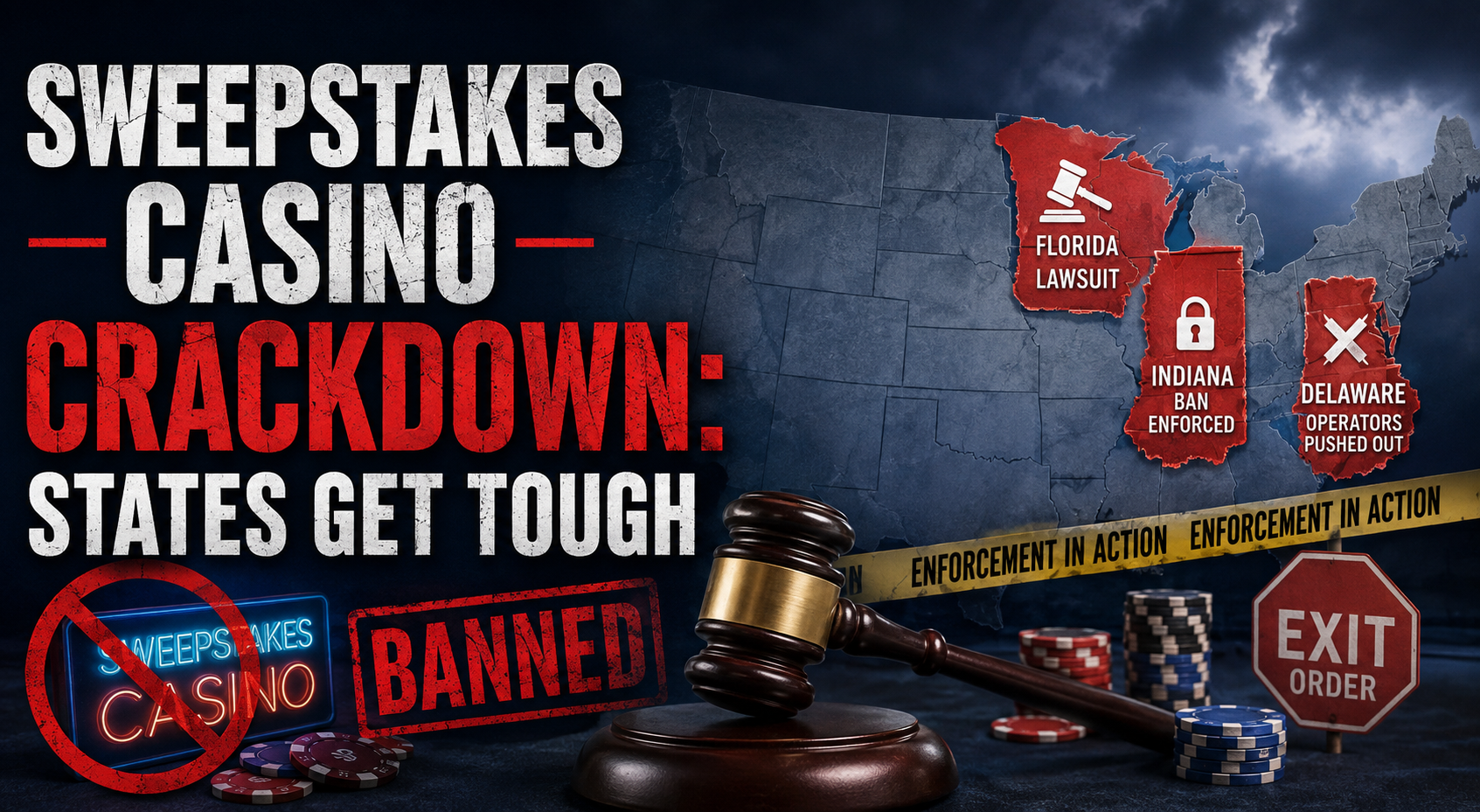

The sweepstakes casino crackdown is picking up speed. Florida just sued two of the biggest brands in the space. Indiana is enforcing a full ban. Delaware has pushed dozens of operators out the door. Together, these three states show a pattern playing out across the country: regulators are done waiting.
Sweepstakes casinos use two currencies. Players get free Gold Coins for entertainment, plus Sweeps Coins that can be redeemed for cash or prizes. Operators argue this setup keeps them outside gambling law. Regulators increasingly disagree, and 2026 has become the year that disagreement turned into lawsuits, bans, and mass operator exits.
Florida Attorney General James Uthmeier filed lawsuits against Stake and VGW on August 19, 2026. VGW runs Chumba Casino, LuckyLand, and Global Poker. Uthmeier called the platforms illegal gambling operations dressed up as free social games.
The lawsuits go further than most. They name payment processors, including Worldpay, Trustly, Praxis, and Breeze Labs, as defendants alongside the operators. Florida wants to block both companies from operating in the state. It also wants forfeiture of past winnings and recovery for residents. Willful violations carry penalties of up to $15,000 each.
The VGW complaint also revealed the scale of the industry. The company reported more than $5 billion in revenue for 2025, with $3.7 billion coming from Chumba Casino alone.
Indiana took a different route in its own sweepstakes casino crackdown. Governor Mike Braun signed House Bill 1052 in March 2026, and the ban took effect July 1, 2026. The law bans dual-currency sweepstakes games that mimic casino, lottery, or sports betting products.
Operators that keep offering these games to Indiana residents face civil penalties of up to $100,000 per violation. The Indiana Gaming Commission enforces the law. Most major sweepstakes brands geo-blocked Indiana players before the deadline rather than risk the fines.
Delaware has no formal ban, but its Division of Gaming Enforcement has been just as effective. The agency forced VGW out in 2025 using cease-and-desist letters. More than 30 operators followed without waiting for a legal fight.
In August 2026, the DGE sent fresh cease-and-desist letters to RealPrize and LoneStar. Both brands agreed to exit, giving Delaware players until September 22, 2026 to withdraw their funds.
Florida, Indiana, and Delaware are not isolated cases. At least 17 states have now banned or restricted the sweepstakes casino model. More than 20 have issued cease-and-desist orders. States like California, New York, New Jersey, Connecticut, and Montana moved first in 2025. Indiana, Iowa, Oklahoma, and Tennessee added new restrictions in 2026.
This pressure is reshaping the market fast. Industry analysts project sweepstakes casino revenue could fall 30 to 40 percent by the end of 2027.
If you play on a sweepstakes casino, check your state’s current legal status before you deposit or redeem winnings. The sweepstakes casino crackdown is changing rules fast, and a platform that was available last month may already be gone.
Licensed, regulated real-money online casinos offer a more stable alternative in states where they exist. These sites operate under state oversight and follow consumer protection rules. They cannot vanish overnight like sweepstakes brands have in Delaware and Indiana.
 Alex Harper • 10 min
read
Alex Harper • 10 min
read
 Alex Harper • 10 min
read
Alex Harper • 10 min
read
 Alex Harper • Aug 27, 2026
  Alex Harper • Aug 27, 2026
 Lara Johns • Aug 26, 2026
  Lara Johns • Aug 26, 2026
 Editorial Statement: Casino US is your trusted source for timely industry updates, in-depth analysis, and honest operator reviews. Our editorial team brings years of specialized gaming industry knowledge to every story, holding ourselves to strict standards of accuracy and objectivity. We're dedicated to providing straightforward, unbiased, and reliable reporting on the US gambling landscape and beyond.